English
 عربي
عربي 
Web tension control is one of the most critical yet often overlooked factors in flexographic printing and slitting operations. At its core, tension control is about maintaining a consistent pulling force on the web material as it travels through the machine. When tension is properly controlled, registration stays accurate, winding is uniform, and material waste is minimized. When it is not, problems multiply quickly—stretched substrates, misregistered colors, telescoped rolls, and frequent machine stops.
This article explains what web tension control is, why it matters for both flexo printing and slitting, what can go wrong, and how to evaluate tension control systems when specifying equipment.
What Is Web Tension Control?
Web tension control refers to the systems and methods used to maintain a consistent level of force applied to a continuous roll of material—known as the "web"—as it moves through a converting machine. The web can be paper, film, foil, non-woven fabric, or laminated materials.
In a typical flexo printing or slitting line, the web travels from an unwinding station through multiple processing zones (printing units, drying sections, slitting blades) to a rewinding station. Tension must be managed at each stage because the material's response to tension varies with its physical properties, width, speed, and the processes being applied.
Tension control systems generally fall into two categories:
-
Open-loop control: Tension is set based on preset parameters without real-time feedback. This approach is simpler but less accurate when conditions change.
-
Closed-loop control: Sensors continuously measure actual tension and feed data back to a controller, which adjusts the drive or brake to maintain the target tension. This is the preferred approach for high-quality production.
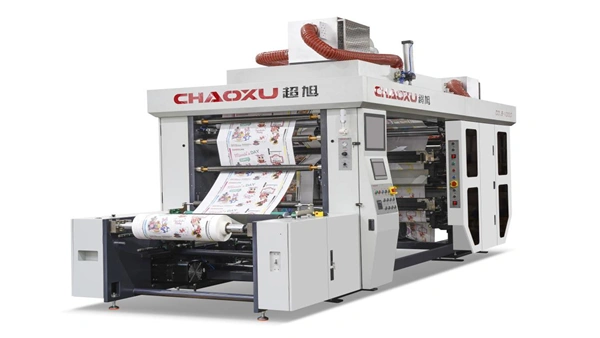
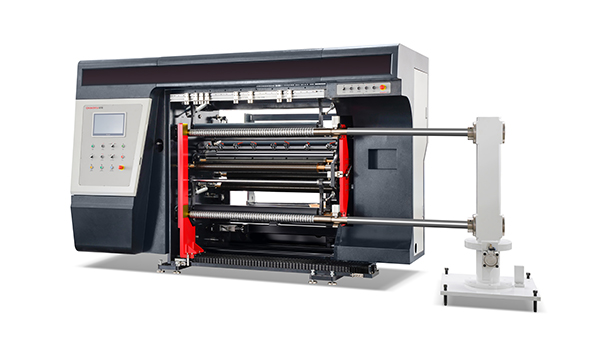
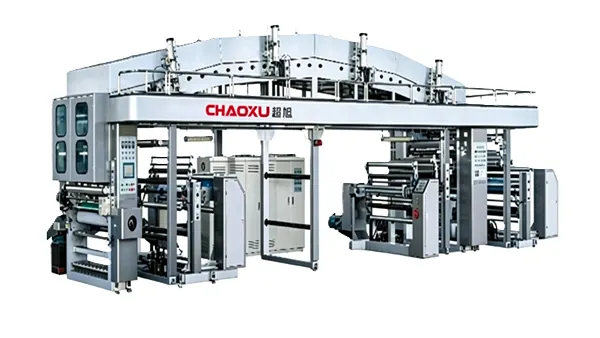
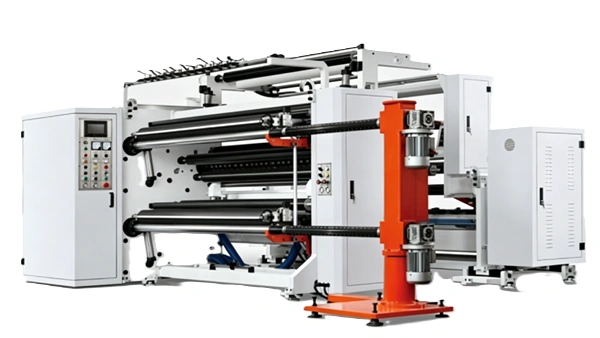
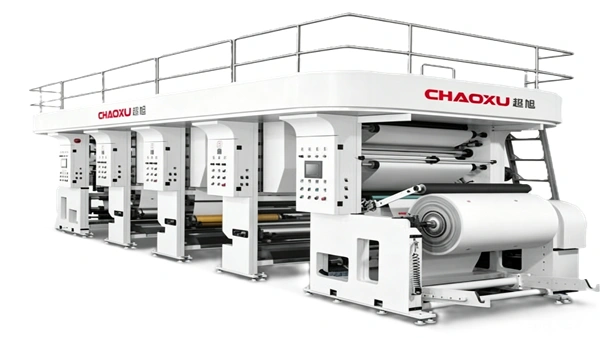
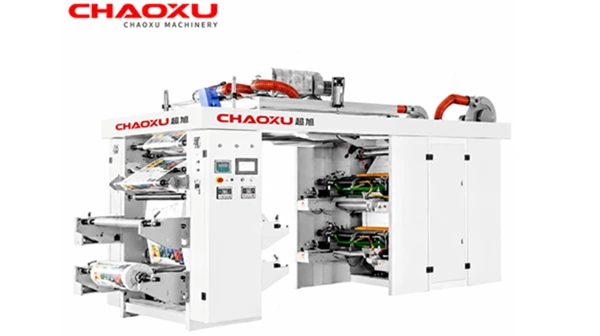
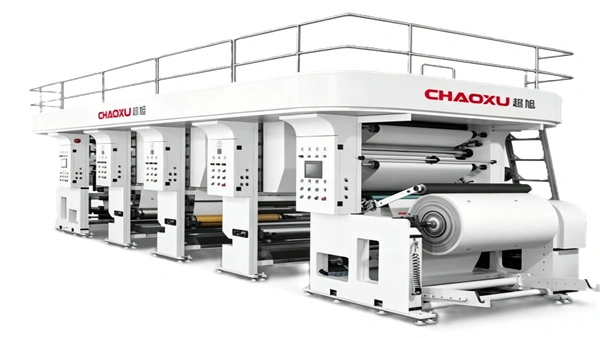
Modern flexo presses and slitting machines increasingly use closed-loop automatic tension control with magnetic powder brakes and high-precision sensors to maintain constant tension throughout the process.
Why Tension Control Matters in Flexo Printing
In flexographic printing, tension directly affects print registration—the alignment of colors on the printed image.
When tension is inconsistent, the web stretches or relaxes unevenly between printing units. This causes each color to land in a slightly different position, resulting in misregistration. For a machine running at 200 meters per minute, even a fraction of a millimeter of misalignment becomes visually obvious and renders the printed material unusable.
The problem is particularly acute with thin, extensible materials like plastic films (BOPP, PET, PE, PVC). These substrates stretch more readily than paper, making them more sensitive to tension fluctuations. A tension spike can elongate the film; a tension drop can cause it to sag and wrinkle. Both conditions compromise print quality.
Tension also affects ink transfer and drying. If the web is too loose, it may flutter, causing inconsistent contact with the anilox roller and plate. If it is too tight, the web may deform, altering the print repeat length.
Why Tension Control Matters in Slitting
In slitting operations, tension control is equally important but for different reasons.
The primary goal in slitting is to convert a wide roll into multiple narrower rolls with clean, straight edges and uniform tightness. Poor tension control produces several common defects:
-
Telescoped rolls: Layers slide sideways relative to each other, creating a cone-shaped roll
-
Wrinkles: Uneven tension causes the web to fold or crease
-
Core distortion: Excessive tension crushes the core or makes it difficult to remove
-
Loose or tight spots: Inconsistent winding tightness across the roll width
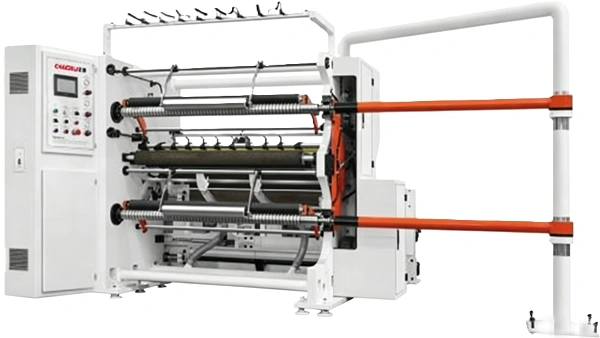
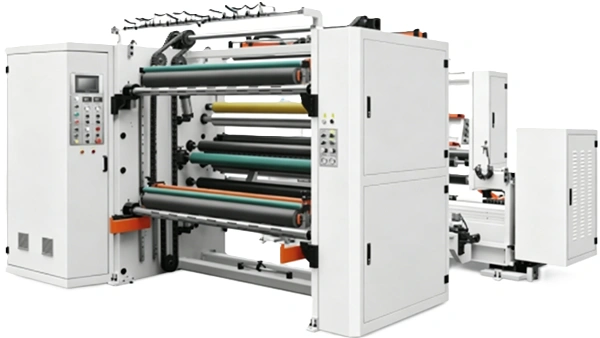
Closed-loop tension control with multi-stage taper tension control can adapt to different materials and support consistent winding tightness. Taper tension—gradually reducing tension as the roll diameter increases—helps maintain uniform wound roll hardness from core to edge.
Key Components of a Tension Control System
A typical web tension control system includes several components working together:
| Component | Function |
|---|---|
| Tension sensors / load cells | Measure actual web tension in real time |
| Controller (PLC) | Compare actual tension to setpoint and calculate adjustments |
| Brakes (unwind) | Apply resistance to control unwind tension |
| Drives (rewind) | Control rewind speed and torque to manage winding tension |
| Dancer rollers | Provide mechanical tension buffering and damping |
| Edge guides (EPC) | Maintain web lateral position, complementing tension control |
In CHAOXU equipment, tension control is typically integrated with Siemens PLC systems, allowing for parameter setting, real-time monitoring, and in some cases remote diagnostics.
Common Tension Control Problems and Their Causes
| Problem | Possible Causes |
|---|---|
| Web wrinkling | Tension too low; uneven tension across width; misaligned rollers |
| Telescoped rewind rolls | Tension too low during rewind; improper taper tension settings |
| Stretched or deformed substrate | Tension too high; abrupt tension changes; material too thin for settings |
| Misregistration in printing | Tension variations between color stations; poor closed-loop response |
| Poor roll edge quality | Tension fluctuations during slitting; inadequate web guiding |
| Roll core damage | Excessive rewind tension; improper core chucking |
How to Evaluate Tension Control When Specifying Equipment
When reviewing flexo presses or slitting machines, buyers should ask specific questions about tension control:
1. What type of tension control does the machine use?
Closed-loop systems with real-time sensors are generally preferred over open-loop systems for consistent quality.
2. How is tension controlled at unwind, through the process, and at rewind?
The best systems manage tension independently at each zone, recognizing that tension requirements differ before, during, and after processing.
3. What tension range can the system handle?
Different materials require different tension levels. A machine that handles both heavy paper (requiring higher tension) and thin film (requiring lower tension) needs a wide controllable range.
4. Is taper tension control available for rewinding?
Taper tension—reducing tension as roll diameter grows—is essential for producing uniformly wound rolls without core crush or telescoping.
5. How does the system respond to speed changes?
During acceleration and deceleration, tension can spike or drop. Good systems compensate for these transients automatically.
6. What sensors are used, and where are they placed?
Sensor placement affects measurement accuracy. Sensors should be positioned where tension is most representative of actual web conditions.
Material Considerations for Tension Control
Different materials have different tension requirements and sensitivities:
| Material Type | Tension Characteristics | Key Considerations |
|---|---|---|
| Paper (60-300gsm) | Moderate stiffness; lower stretch | Tension can be relatively higher; less sensitive to fluctuations |
| Plastic films (BOPP, PET, PE, PVC) | High stretch; low stiffness | Requires precise, low-tension control; sensitive to over-tension |
| Aluminum foil | Low stretch; tear-prone | Very low tension required; risk of tearing |
| Non-woven fabric | Variable; often low stiffness | Requires careful tension management to avoid distortion |
| Laminated materials | Composite behavior; may have internal stresses | Tension must account for layer interactions |
The Role of Servo Drives in Tension Control
Servo drives have transformed tension control in modern flexo and slitting equipment. Unlike traditional mechanical drive systems, servo motors provide:
-
Precise speed control: Individual motors can be accurately synchronized
-
Rapid response: Tension corrections happen in milliseconds
-
Independent zone control: Each printing unit or slitting zone can have its own tension settings
Full-servo flexo presses, for example, use servo motors to drive each printing unit independently. This allows the tension control system to isolate and correct variations at each stage rather than propagating them through the entire machine.
Checklist: Tension Control System Evaluation
When evaluating a flexo press or slitting machine for your operation, use this checklist:
- Does the machine use closed-loop tension control?
- Are tension sensors (load cells) installed at critical points?
- Is the control system PLC-based with a user-friendly interface?
- Does the system support taper tension control for rewinding?
- Can tension be set independently for unwind, process, and rewind zones?
- Is the tension range suitable for your materials (paper, film, foil)?
- Does the system compensate automatically for speed changes?
- Are edge guide (EPC) and tension control integrated?
- Is remote diagnostics or support available for the control system?
Summary
Web tension control is not a peripheral feature—it is central to producing quality printed and slit rolls. In flexo printing, tension stability determines registration accuracy, especially with extensible films. In slitting, it determines roll quality, edge straightness, and winding uniformity.
When specifying equipment, buyers should prioritize machines with closed-loop tension control, independent zone control, and taper tension capability. The right tension control system reduces waste, improves productivity, and extends equipment life.
For a detailed review of CHAOXU flexographic printing machine configurations and tension control options, explore the available models and technical specifications. Discuss your specific material and production requirements with the engineering team to confirm the appropriate tension control setup for your application.
FAQ
Q: What is the difference between open-loop and closed-loop tension control?
A: Open-loop tension control uses preset parameters without real-time feedback. Closed-loop control uses sensors to measure actual tension continuously and adjusts the drive or brake automatically to maintain the setpoint. Closed-loop systems provide more consistent tension, especially during speed changes and with sensitive materials.
Q: Why does tension need to be controlled differently for paper and film?
A: Paper is relatively stiff and less stretchable, allowing higher tension levels. Plastic films (BOPP, PET, PE, PVC) are more extensible and require lower, more precise tension to avoid stretching, wrinkling, or distortion. Film also responds more quickly to tension changes, requiring faster control response.
Q: What is taper tension control and why is it important?
A: Taper tension control gradually reduces winding tension as the roll diameter increases. This prevents the outer layers from crushing the inner layers or the core, and helps produce rolls with uniform hardness from the core to the outside.
Q: How does tension control affect print registration?
A: Inconsistent tension causes the web to stretch or relax between printing units, shifting the position where each color is applied. Even small tension variations can cause color-to-color misregistration, especially at high speeds.
Q: What are the signs of poor tension control in slitting?
A: Common signs include telescoped rolls (layers sliding sideways), wrinkled or creased material, loose or tight spots across the roll width, and difficulty removing rolls from the core.
Q: Can tension control be added to existing equipment?
A: In many cases, yes. Retrofitting existing machines with closed-loop tension control systems—including sensors, controllers, and upgraded drives—is possible. However, the feasibility and cost depend on the machine's age, mechanical condition, and control architecture. Consult with the equipment manufacturer or a qualified automation provider for a specific assessment.