English
 عربي
عربي 
When comparing flexographic printing machines, the terms "full servo" and "single servo" appear frequently in specification sheets. But what do these terms actually mean for your production line?
In short: a full servo flexo press uses independent servo motors on each printing station, while a single servo press uses one primary servo motor with mechanical gearing to drive the remaining stations. This difference in architecture directly affects maximum speed, register accuracy, and the types of jobs the machine can handle efficiently.
This article breaks down the technical differences between full servo and single servo configurations—focusing on what the performance specs actually mean for paper packaging production.
What Is a Single Servo Flexographic Printing Machine?
A single servo flexographic printing machine uses one servo motor as the primary drive source. This motor typically drives the main line shaft or central impression drum, while individual print decks are mechanically geared off that master drive.
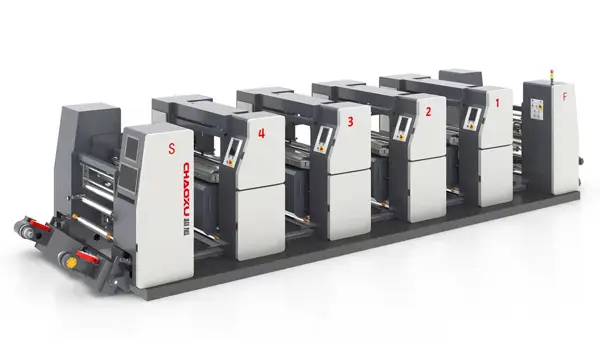
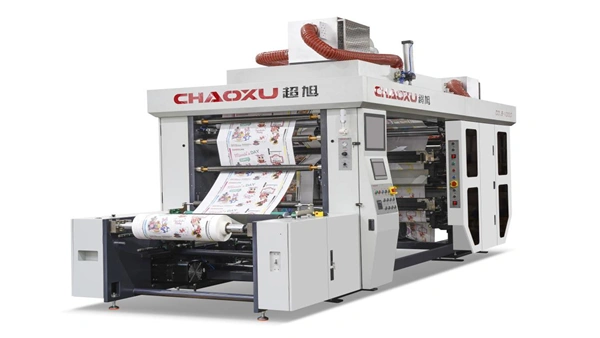
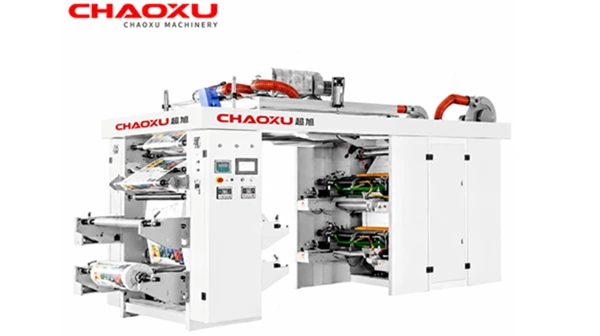
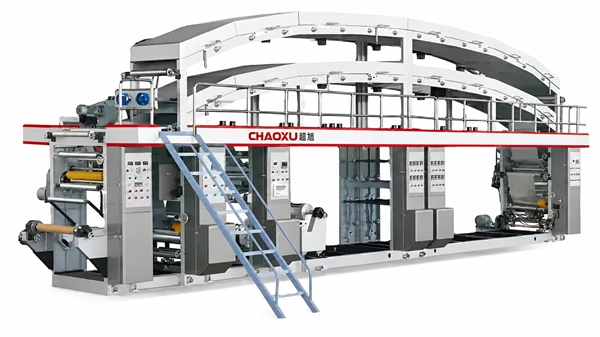
In Chaoxu's unit-type single servo model (CX-JZ.B), the configuration is designed for paper-based packaging applications including paper cup printing, paper bag printing, paper box printing, corrugated carton preprint, and food wrapper paper printing.
Key specifications for the single servo unit-type press:
-
Maximum printing width: 1000mm–1600mm
-
Maximum speed: 150m/min
-
Register precision: ≤±0.15mm
The single servo architecture provides a practical balance of performance and capital investment for converters running stable, repeatable jobs on consistent substrates.
What Is a Full Servo Flexographic Printing Machine?
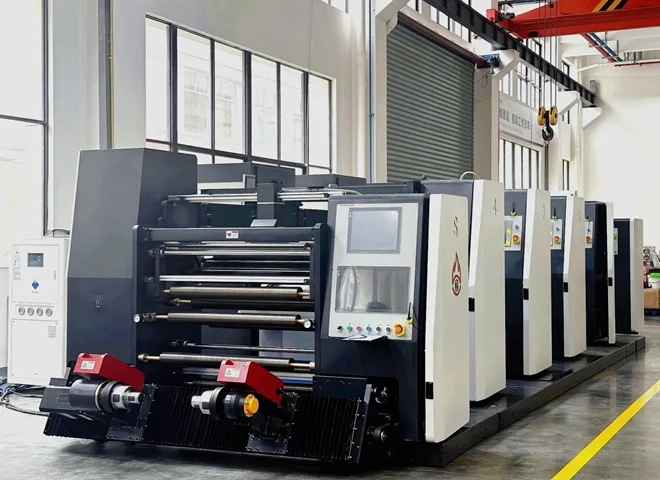
A full servo flexographic printing machine replaces mechanical linkages with independent servo motors on every print station—and in many cases, on anilox and metering rolls as well. All axes are synchronized through a digital control system rather than physical gears.
Chaoxu's unit-type full servo model (CX-JZ.D) shares the same application range as its single servo counterpart—paper cup, paper bag, paper box, corrugated carton preprint, and food wrapper paper printing.
Key specifications for the full servo unit-type press:
-
Maximum printing width: 1000mm–1600mm
-
Maximum speed: 200m/min
-
Register precision: ≤±0.1mm
The full servo architecture enables independent control of each printing station, allowing for more precise registration and faster setup on complex jobs.
Direct Specification Comparison
The table below compares the core performance specifications of Chaoxu's single servo and full servo unit-type flexo presses:
| Specification | Single Servo (CX-JZ.B) | Full Servo (CX-JZ.D) |
|---|---|---|
| Max. Printing Width | 1000–1600mm | 1000–1600mm |
| Max. Speed | 150m/min | 200m/min |
| Register Precision | ≤±0.15mm | ≤±0.1mm |
| Print Repeat Range | 250–800mm | 250–800mm |
| Printing Material | 60–300gsm paper, OPP, PET, PVC | 60–300gsm paper, OPP, PET, PVC |
| Drying Options | Hot Air / IR / UV | Hot Air / IR / UV |
| Unwinding Diameter | 1524mm | 800mm |
Source: Chaoxu Machinery product specifications
For a complete overview of all available configurations, review the available flexographic printing machine configurations.
What the Speed Difference Actually Means
The 50m/min difference between single servo (150m/min) and full servo (200m/min) is significant in real production terms.
For a typical 8-hour production shift:
-
Single servo at 150m/min: theoretical maximum of 72,000 meters per shift
-
Full servo at 200m/min: theoretical maximum of 96,000 meters per shift
The actual throughput advantage depends on job complexity, number of color changes, and setup requirements. However, the speed difference becomes more pronounced on longer runs and jobs requiring frequent color changes.
It is worth noting that both machines share the same maximum printing width range (1000–1600mm) and print repeat range (250–800mm), meaning the speed advantage of the full servo configuration is not achieved by sacrificing print width or repeat length flexibility.
What the Register Accuracy Difference Actually Means
Register precision—the ability to align colors precisely on the printed substrate—is one of the most critical quality metrics in flexographic printing.
The full servo press achieves ≤±0.1mm register precision, compared to ≤±0.15mm for the single servo model.
What 0.05mm difference means in practice:
| Application | Single Servo (±0.15mm) | Full Servo (±0.1mm) |
|---|---|---|
| Simple 1–2 color paper bags | Acceptable | Excellent |
| 4–6 color food packaging | Marginal for fine details | Clean, sharp results |
| Detailed graphics with fine text | Risk of visible misregister | Consistent alignment |
| High-end retail packaging | May require rework | Meets brand standards |
For converters running jobs with fine text, detailed graphics, or tight brand color requirements, the full servo's tighter register tolerance can reduce waste and rework. For simpler jobs with fewer colors and looser tolerance requirements, the single servo's ±0.15mm precision may be entirely sufficient.
Control Architecture: The Real Difference
Beyond the numbers, the fundamental difference between single servo and full servo lies in control architecture.
Single servo architecture:
-
One servo motor drives the main shaft
-
Print decks are mechanically geared to the main drive
-
All stations move together as a single mechanical unit
-
Register adjustments require mechanical intervention or limited electronic correction
Full servo architecture:
-
Independent servo motors on each printing station
-
Digital synchronization replaces physical gears
-
Each station can be positioned and adjusted independently
-
Register settings can be stored and recalled electronically
Chaoxu's full servo model incorporates closed-loop tension control and automatic electronic web-guide systems, which contribute to printing tension stability and register accuracy. The single servo model shares many of these features—including closed-loop tension control, automatic web-guide, and automatic register inspection—but operates within the mechanical constraints of a geared architecture.
The practical implication: full servo presses can store complete job recipes and recall them with minimal setup time, while single servo presses may require more manual adjustment when switching between significantly different jobs.
Which Configuration Fits Your Production?
The choice between single servo and full servo depends on your actual production requirements rather than theoretical maximums.
Single servo may be the practical choice when:
-
Running mostly stable, repeatable jobs with few substrate changes
-
Operating with 3–4 colors on standard paper stocks
-
Production speed requirements are within 150m/min
-
Register tolerance of ±0.15mm meets your quality standards
-
Capital investment is a primary constraint
Full servo offers clear advantages when:
-
Running jobs with 6 or more colors requiring precise registration
-
Frequent job changeovers with different substrates
-
Production requires speeds above 150m/min
-
Fine text and detailed graphics are common
-
Job storage and rapid recall will improve efficiency
Both configurations from Chaoxu support eco-friendly printing with water-based or UV inks, ceramic anilox rollers, and multiple drying options including hot air, IR, and UV drying.
To compare all available models side by side, compare related flexo press models based on your specific production requirements.
Common Questions About Servo Configurations
What is the main difference between single servo and full servo flexo?
The main difference is the number of independently controlled servo axes. Single servo uses one primary servo motor with mechanical gearing to drive other stations. Full servo uses independent servo motors on each printing station, eliminating mechanical gears and enabling digital synchronization of all axes.
Does full servo always mean better print quality?
Not necessarily. Full servo enables tighter register precision (≤±0.1mm vs ≤±0.15mm) and more consistent control, which improves quality on complex, multi-color jobs. However, for simpler applications with fewer colors and looser tolerance requirements, a single servo press can deliver perfectly acceptable print quality at a lower capital cost.
Can a single servo press be upgraded to full servo later?
Typically no. The difference is fundamental to the machine's mechanical architecture. Single servo presses are built with mechanical gearing between stations, while full servo presses replace these gears with independent motors and digital controls. This is not a field-upgradeable change.
What materials can these machines print on?
Both the single servo and full servo unit-type presses from Chaoxu are designed for paper-based materials including 60–300gsm paper rolls, as well as OPP, PET, and PVC films. Both models support the same material range.
How does servo configuration affect maintenance?
Single servo presses have fewer servo motors and electronics, which can mean simpler maintenance for smaller teams. Full servo presses have more electronic components but eliminate mechanical gears that require periodic adjustment and replacement. The maintenance profile differs rather than one being universally "easier" than the other.
Key Takeaways
-
Speed difference: Full servo reaches 200m/min vs. 150m/min for single servo—a 50m/min advantage that can significantly increase shift output
-
Accuracy difference: Full servo achieves ≤±0.1mm register precision vs. ≤±0.15mm for single servo—critical for fine detail work
-
Architecture difference: Full servo uses independent motors on each station; single servo uses one motor with mechanical gearing
-
Application fit: Single servo suits stable, repeatable jobs with fewer colors; full servo excels at complex, multi-color work with frequent changeovers
-
Both configurations share the same printing width range, repeat range, material compatibility, and drying options
Before making a purchasing decision, review the detailed specifications of available flexographic printing machine configurations and discuss your specific material types, color requirements, and production volume targets with the equipment supplier.