English
 عربي

Ghosting and dot gain are often treated as the same “ink problem,” but they usually originate on different sides of the print nip. A repeat interval that matches a roller circumference points to a mechanical or anilox rotation fault; a tone-dependent expansion that worsens with impression pressure points to the plate-to-substrate nip. Measuring interval first, then tone response, prevents adjusting anilox and impression settings in the wrong order.
Why the two defects get confused
Ghosting is a faint, unintended image that appears within or around a printed area, most visibly in large solids. Dot gain is the enlargement of halftone dots beyond their intended size, measured as a change in tonal value at a given screen percentage. In production, both can show up as “density shifting” or “the solid looks wrong,” and both can be influenced by the anilox roller. That overlap in symptoms is why operators sometimes reach for the impression knob when the anilox is the actual constraint, or order a new anilox when the real problem is gear pitch.
The diagnostic separation matters because the two defect families have different cost structures and different confirmation steps. An anilox or ink-delivery fault is usually addressed through cleaning, ink viscosity, chamber settings, or roller specification. An impression or mechanical fault is addressed through kiss-impression reset, plate mounting, gear inspection, or cylinder concentricity. Guessing between them consumes press time and can introduce a second fault while the first is still unresolved.
Step 1: Measure the ghost interval before touching anything
The fastest discriminator for ghosting is the repeat distance between faint images. Measure the distance between repeating ghost bands in millimetres and divide by π. If the result matches the diameter of a roller or cylinder in the print unit—within roughly ±2 mm—the fault is most likely on a rotating component rather than in ink chemistry or substrate.
This single calculation splits ghosting into two practical branches:
- Interval matches the anilox roller circumference. The anilox is not refilling its cells consistently from one rotation to the next, or it is not transferring a consistent ink film to the plate. This is the classic anilox-side ghosting pattern.
- Interval matches the plate cylinder or impression cylinder. The fault is mechanical or impression-related: gear pitch error, worn bearings, cylinder eccentricity, or plate mounting variation that changes the nip once per revolution.
If the ghost does not repeat at a fixed, measurable interval—if it wanders within a solid or appears only after a speed change—start with ink delivery and drying behaviour rather than disassembling the drive train.
Step 2: Confirm whether the anilox can recover enough ink
Once the interval points to the anilox side, the question shifts from “is the anilox dirty” to “is the anilox delivering a consistent volume through the entire revolution.” A common root cause is not a worn roller but a partially plugged one: dried ink in the cells reduces the volume available on each rotation, and the deficiency becomes visible as a ghost of the previous image. Cleaning schedule matters more than cleaning method alone; high-volume presses typically need a deep clean at least weekly, and any roller left idle for several days should be cleaned before it returns to press.
Ink starvation produces a similar symptom and should be ruled out at the same time. Low chamber pressure, inappropriate ink fluidity, or a chamber/doctor blade combination that does not flood the cells can all prevent the anilox from recovering between impressions. Before changing the roller specification, increase ink pressure into the chamber and verify that the doctor blade is not prematurely drying ink on the roller surface.
| Ghosting pattern | Most likely side | First confirmation step | Next step if unresolved |
| Faint image repeats at anilox circumference | Anilox / ink delivery | Deep clean anilox; check chamber pressure and ink viscosity | Review anilox cell volume and line count against job requirements |
| Faint image repeats at plate or impression cylinder circumference | Mechanical / impression | Check gear pitch, bearing play, and cylinder concentricity | Reset kiss impression; inspect plate mounting |
| Irregular ghosting, worsens with speed or after pauses | Ink drying / fluidity | Check ink viscosity, retarder addition, and doctor blade condition | Evaluate chamber design and ink recirculation |
| Ghost only in large solids, absent in fine work | Anilox volume / ink transfer | Verify anilox volume for the solid area; confirm cleaning frequency | Compare anilox specification with ink and substrate |
Step 3: Separate dot gain from over-impression
Dot gain becomes a distinct diagnostic target once ghosting has been ruled out or isolated. In flexographic printing, an initial increase in pressure within the printing nip raises both solid density and tone gain, because more ink transfers from plate to substrate. The practical implication is that a dot gain complaint is not automatically a plate or anilox problem; it can be a pressure problem.
The “kiss” principle is the reference point. Flexography is designed to transfer ink with the lightest impression that produces a complete image, not with the heaviest impression the press can apply. Over-impression creates a halo—dark edges around printed features—and increases dot gain across the tonal range. If dot gain is rising at the same time that edges look dark and surroundings look squeezed, impression is the first variable to confirm, not the anilox.
A useful production reference is the 50% tint. In corrugated preprint contexts, dot gain is commonly checked against a target at 50% tint, with <20% gain used as a practical acceptance reference in some corrugated applications. This is not a universal specification for every substrate and ink system, but it gives the operator a defined tone value to measure before and after each adjustment. If the 50% patch is stable but the solid is ghosting, the problem is almost certainly on the ink-delivery side. If the 50% patch expands as impression is increased, the pressure setting is part of the root cause.
Step 4: Check the anilox specification only after delivery is confirmed
Anilox line count and cell volume influence both ink laydown and dot gain behaviour. Higher cell volumes generally transfer more ink, and studies of flexographic density and tone gain have shown that dot gain can fall as cell volume is increased from very low levels to more workable volumes—because the ink film becomes more continuous rather than breaking up in the cell. This does not mean “higher volume is always better”; it means that a volume too low for the job can force the operator to compensate with pressure, which then creates a dot gain problem.
Before changing the anilox, confirm three things with the supplier or the press records: the line count is appropriate for the screen ruling being printed, the cell volume is matched to the ink and substrate, and the roller is actually delivering that volume after cleaning. An anilox roller that has lost volume through incomplete cleaning can behave like an undersized roller even if the original specification was correct. If the anilox has been verified and the ghosting persists at a fixed mechanical interval, the next step is the drive train, not another roller.
A practical pre-adjustment checklist
Use this checklist before making an anilox change or a significant impression adjustment:
- Measure the ghost repeat interval in millimetres and divide by π.
- Compare the result with every roller and cylinder diameter in the print unit.
- If the interval matches a roller, inspect that component before changing ink or pressure.
- Deep clean the anilox and confirm chamber pressure and ink viscosity.
- Print a 50% tint patch and compare dot gain before and after any impression change.
- Confirm that the anilox line count and cell volume are appropriate for the job, not just “what was on the press.”
- Record the adjustment and the measured result for the next run.
When to bring in the machine configuration question
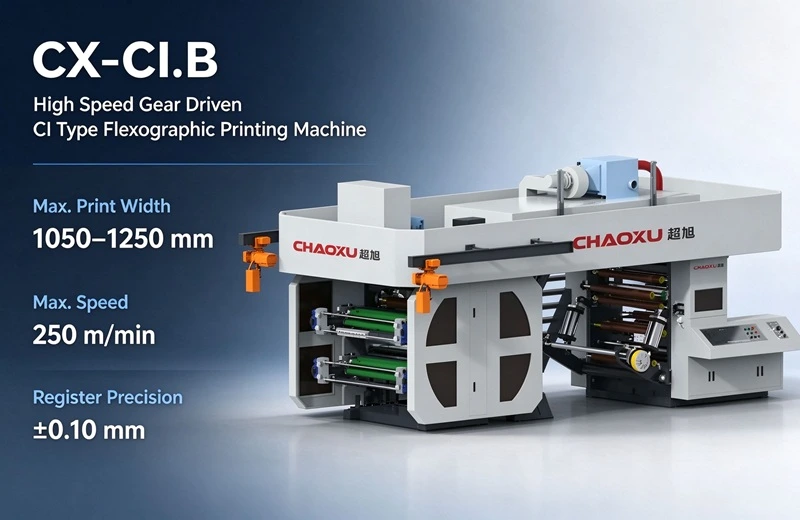
If ghosting persists after anilox cleaning, ink delivery is confirmed, and the repeat interval consistently points to a gear or cylinder fault, the constraint may be in the drive architecture rather than in a single worn part. Mechanically driven presses accumulate backlash and torsional vibration over time, and that variation can show up as density inconsistency or ghosting that pressure adjustment cannot eliminate. At that point, the productive next step is to review the press configuration and the condition of the drive train, not to keep compensating at the ink or impression controls.
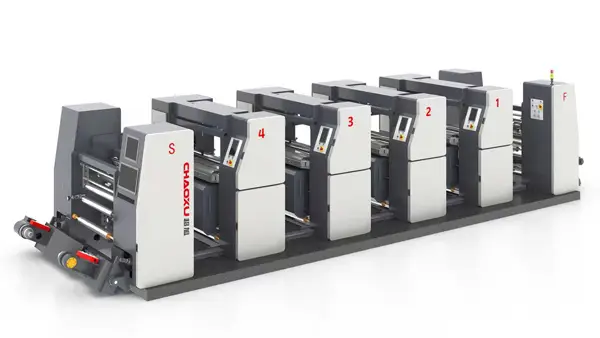
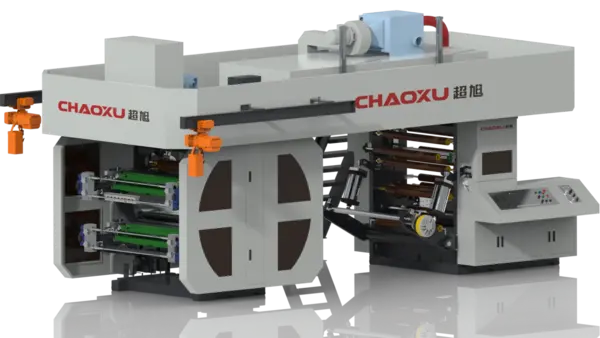
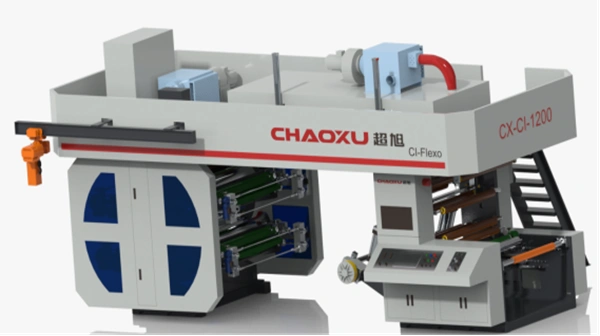
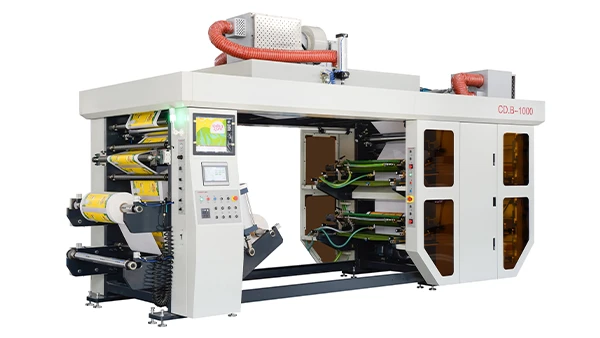
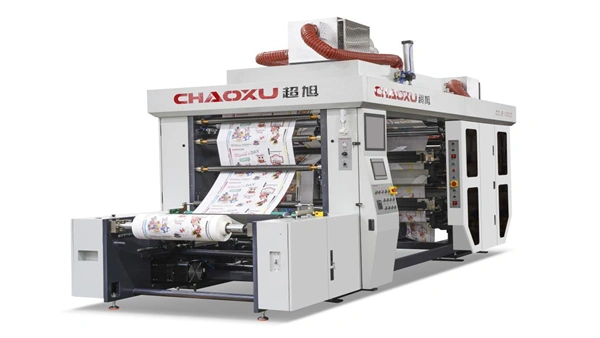
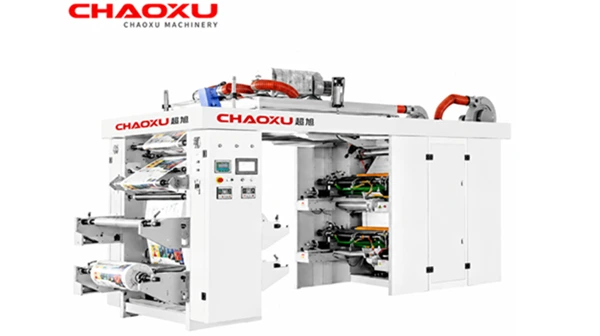
For operations evaluating whether a current press can hold consistent ink transfer across long runs and multiple substrates, the available flexographic press configurations and their drive and tension-control features are worth reviewing against the specific ghosting pattern observed. The diagnostic work done at the press—interval measurement, cleaning records, and tone-gain measurements—becomes the technical basis for that evaluation.
FAQ
Can ghosting and dot gain have the same root cause?
They can share an anilox-related contributor, but they are not the same defect. Ghosting is primarily an ink-recovery or mechanical-repeat problem; dot gain is a tone-reproduction problem that can be driven by impression pressure, plate hardness, or anilox volume. Always separate the interval check from the tone check before deciding on a single corrective action.
What does a ghost interval that matches the plate cylinder mean?
It points toward a once-per-revolution mechanical or impression variation—gear pitch error, bearing play, cylinder eccentricity, or plate mounting inconsistency—rather than an ink chemistry problem. Check the mechanical components on that cylinder before changing the anilox.
How often should an anilox be deep cleaned to prevent ghosting?
Frequency depends on ink type, production volume, and substrate. Daily cleaning after the run and weekly deep cleaning are common baselines for high-volume presses; rollers left idle for several days should be cleaned before returning to press. Confirm the schedule against actual cell-volume condition rather than relying on calendar intervals alone.
Does increasing impression pressure fix ghosting?
It can temporarily mask some density variation by transferring more ink, but it also raises dot gain and can create halo effects. If the ghost repeats at a mechanical interval, increasing pressure treats the symptom and may introduce a second defect.
Is a higher anilox cell volume always better for dot gain?
No. Higher volume can improve ink continuity in solids, but the correct volume depends on the screen ruling, ink system, and substrate. The goal is a volume that transfers a complete film without forcing the operator to over-impress to compensate for starvation.
When should I consider the press drive configuration rather than a component change?
If cleaning, ink delivery checks, and mechanical inspection of the indicated roller do not resolve a repeat ghosting pattern, the drive train itself may be introducing variation. Reviewing the unit type full servo flexographic printing machine is one way to evaluate whether independent per-station drive control addresses the variation observed at the press.
Conclusion
The most useful first move in a ghosting or dot gain investigation is not a wrench or a new anilox—it is a measurement. Ghost interval, divided by π, tells you which side of the print unit to examine. The 50% tint tells you whether impression pressure is part of the tone problem. Only after those two checks should anilox volume, chamber settings, or gear condition be addressed in depth.
Avoid the common sequence of raising impression to hide a ghost, then lowering ink viscosity to compensate for the dot gain that the higher impression created. That loop consumes press time and leaves the root cause untouched. When the measured interval points to a repeat mechanical fault and the anilox has been verified, the next step is a technical review of the press configuration and drive condition—not another guess at the ink station. You can review the press configuration and drive condition against the measurements taken at the machine.