English
 عربي
عربي 
The choice between a servo-driven and a gear-driven flexographic printing press is one of the most consequential equipment decisions a packaging converter can make. There is no single "best" option—the right choice depends on your substrate mix, average run length, operator skill level, and long-term production goals.
This guide provides a practical framework for evaluating both drive architectures. It does not recommend one over the other, but rather gives you the criteria to make an informed decision based on your specific production reality.
Understanding the Two Drive Architectures
Gear-Driven (Mechanical Line-Shaft) Presses
In a conventional gear-driven press, a single main motor turns a long shaft that distributes power to each print station through mechanical couplings and gear trains. All printing units are physically linked, meaning they must accelerate, decelerate, and run at the same speed profile.
How it works: One motor → line shaft → gears → each print station. Speed changes and registration adjustments are made mechanically.
Servo-Driven (Gearless) Presses
A servo-driven press replaces the mechanical line shaft with independent AC servo motors at each print deck. Each axis—plate cylinder, anilox roll, impression cylinder—has its own motor and controller, synchronized electronically rather than mechanically.
How it works: Multiple independent servo motors → electronic synchronization → each station operates autonomously.
Key Selection Criteria
1. Substrate Types and Thickness
For thin, extensible films (12-micron PET, 30-micron BOPP, LDPE, stretch films):
-
Servo-driven presses offer significant advantages. Independent tension zones can be stored as recipes for each substrate, and closed-loop tension control adapts automatically.
-
Gear-driven presses struggle with thin films because gear backlash creates tension variations that cause stretching and deformation.
For paper, paperboard, and heavier substrates (paper cup stock, kraft paper, corrugated):
-
Both drive types can perform adequately.
-
Gear-driven presses may be a cost-effective option if you primarily run heavier, less sensitive materials.
For mixed substrate production (running films and paper on the same press):
-
Servo-driven architecture provides the flexibility to store and recall different tension profiles for each material.
2. Average Run Length and Changeover Frequency
| Production Profile | Recommended Drive Type | Rationale |
|---|---|---|
| Long runs (>10,000 m), few changeovers | Gear-driven can be viable | Setup time is amortized over long production; lower initial cost may be attractive |
| Short runs (<3,000 m), frequent changeovers | Servo-driven recommended | Recipe recall reduces make-ready time from minutes to seconds |
| High-mix, low-volume production | Servo-driven strongly recommended | The ability to store and recall full job parameters delivers rapid payback |
When job run lengths drop below 3,000 meters, the make-ready waste savings from servo architecture often justify the higher initial investment.
3. Registration Accuracy Requirements
For high-precision work (multi-color labels, fine text, tight trapping):
-
Servo-driven presses typically achieve register precision of ≤±0.1mm. Electronic camming allows sub-impression corrections that are not possible with mechanical systems.
For less demanding applications (simple one- or two-color packaging):
-
Gear-driven presses may meet requirements at lower cost.
The critical difference: A servo press holds phasing in the drive's memory, so the first impression after a restart is often salable. A gear-driven press typically requires 200-400 meters of make-ready waste on every restart.
4. Maintenance and Total Cost of Ownership
Gear-driven presses require:
-
Regular gear gap calibration
-
Gear lubrication and oil changes
-
Clutch and brake maintenance
-
Mechanical alignment checks
-
Replacement of wear parts (gears, shafts, universal joints)
Servo-driven presses require:
-
Regular cleaning of encoder components
-
Monitoring servo motor operating temperature and current fluctuations
-
Periodic software updates
-
Electrical system checks
Quantitative difference: Servo-driven presses can reduce daily mechanical maintenance workload by more than 50% compared to gear-driven presses.
5. Energy Consumption
Servo motors consume power only when in motion, reducing idle energy consumption. By eliminating energy losses associated with mechanical gearboxes, servo systems can achieve energy savings between 7% and 21%.
For converters running multiple shifts, these energy savings can contribute meaningfully to operating cost reduction.
Comparison Table: Gear-Driven vs. Servo-Driven Flexo Presses
| Dimension | Gear-Driven (Line-Shaft) | Servo-Driven (Gearless) |
|---|---|---|
| Registration correction | Mechanical differentials; manual phase adjustment | Electronic camming; sub-impression correction |
| Make-ready waste per restart | 200-400 meters typical | 40-80 meters typical |
| Tension control | Global adjustment via dancer rollers | Independent zone settings stored per SKU |
| Mechanical wear points | Gears, shafts, clutches, universal joints | Minimal; direct-drive eliminates most wearing parts |
| Job recall | Manual notes and trial pulls | Recipe-driven; parameters loaded automatically |
| Substrate flexibility | Limited; tension variations affect thin films | High; stored recipes for each material |
| Initial cost | Lower | Higher |
| Long-term maintenance | Higher (gears, lubrication, alignment) | Lower (electronic, software-focused) |
Common Misconceptions
Myth 1: "Servo-driven presses are always better."
Reality: For converters running long runs of heavy paper with few changeovers, a gear-driven press may be the more economical choice. The higher initial cost of servo architecture may never pay back if the production profile doesn't leverage its advantages.
Myth 2: "Gear-driven presses are obsolete."
Reality: Gear-driven presses remain viable for many applications, particularly in markets where cost sensitivity is high and production runs are long and consistent.
Myth 3: "Any servo motor is the same."
Reality: Servo architectures vary significantly. Bus cycle time, encoder resolution, and mechanical stiffness all affect performance. For high-speed work above 400 m/min, a bus cycle under 1 millisecond is important.
Selection Checklist for Buyers
Before making a decision, review these questions with your production team:
- What substrates do we run most frequently? Do we run thin films that are tension-sensitive?
- What is our average job run length? How many changeovers per shift?
- What registration accuracy do our customers require?
- Do we have in-house technical capability for electronic troubleshooting?
- What is our total cost of ownership threshold—lowest initial cost or lowest lifetime cost?
- Will our substrate mix change in the next 3-5 years?
- Do we need to store and recall job parameters for repeat orders?
Making the Final Decision
The choice between servo-driven and gear-driven flexo presses ultimately depends on your specific production environment. There is no universal "right" answer—only the right answer for your operation.
If your production involves:
-
Thin films and extensible substrates → Servo-driven architecture provides superior tension control
-
Frequent changeovers and short runs → Recipe storage and faster make-ready justify the investment
-
High-precision multi-color work → Electronic registration control delivers consistent accuracy
-
Heavy paper, long runs, stable production → Gear-driven may be a cost-effective solution
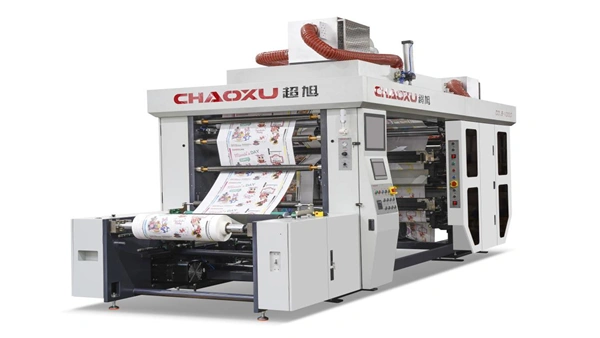
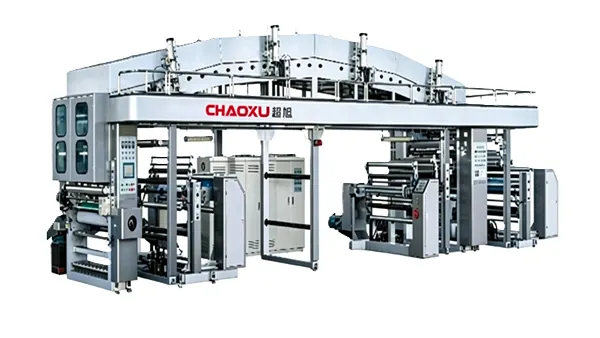
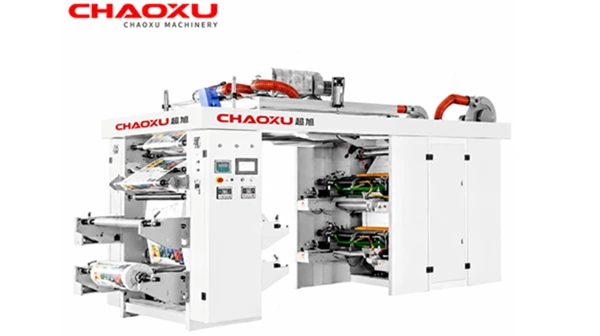
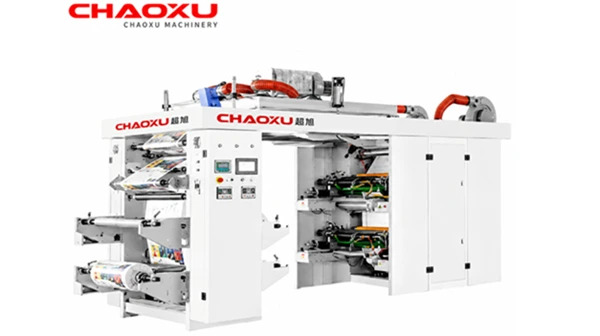
If you are still unsure which drive architecture fits your production requirements, reviewing available flexographic printing machine configurations can help clarify the options. The engineering team can also discuss specific substrate behavior, print width, color stations, and capacity targets before selection.
Frequently Asked Questions
Q1: What is the main difference between servo-driven and gear-driven flexo presses?
Servo-driven presses use independent motors at each print station, synchronized electronically. Gear-driven presses use one motor and a mechanical line shaft with gears to distribute power to all stations. This fundamental difference affects registration accuracy, make-ready waste, tension control, and maintenance requirements.
Q2: How much make-ready waste can I save with a servo-driven press?
A servo press typically requires 40-80 meters of make-ready waste per restart, compared to 200-400 meters for a gear-driven press. For converters running multiple short jobs daily, these savings can be substantial.
Q3: Are servo-driven presses more expensive to maintain?
Servo-driven presses have different maintenance requirements—focusing on electronics, software, and encoder cleaning rather than mechanical gears and lubrication. They have fewer moving parts and can reduce daily mechanical maintenance workload by more than 50%. However, they require technical capability for electronic troubleshooting.
Q4: Can a gear-driven press print on thin films?
Yes, but with limitations. Gear backlash creates tension variations that can cause stretching and deformation on thin, extensible films like LDPE and light-gauge aluminum. Servo-driven presses offer independent tension zone control that better accommodates these challenging substrates.
Q5: How do I know if my production justifies the higher cost of a servo-driven press?
Ask your team: "How many meters per shift do we run that never get invoiced?" The answer often clarifies the economics. If make-ready waste, substrate waste from tension issues, or changeover time is significant, servo architecture typically pays back faster than simple capex calculations suggest.
Q6: What should I look for when comparing servo platforms?
Key factors include: bus cycle time (under 1 ms for high-speed work), direct-drive vs. belt-coupled motors, tension transducer placement, and recipe management integration. Encoder resolution also matters—16,000+ PPR provides finer register correction than entry-level 4,000 PPR.
Conclusion
Selecting between a servo-driven and a gear-driven flexographic printing machine requires a clear understanding of your production profile. The right choice depends on your substrate mix, average run length, registration requirements, and maintenance capabilities—not on marketing claims.
Start by evaluating your actual production data: average run length, changeover frequency, substrate types, and current waste rates. Then compare how each drive architecture addresses your specific challenges.
For a detailed review of available flexo press configurations and how they map to different production profiles, explore the flexographic printing machine product category. The engineering team can also provide a personalized configuration analysis based on your material type, print width, color count, and production targets.