English
 عربي
عربي 
Before buying a flexo press for corrugated box production, confirm four things: the board range (flute type, liner grade, thickness), the required print quality (registration tolerance, color count, coverage area), the anilox and plate system matched to your substrate, and the realistic running speed on your actual board. Most purchase mistakes trace back to skipping one of these steps or accepting a specification without testing it on the board you actually run.
Why a Checklist Matters More Than a Specification Sheet
Specification sheets list what a machine can do under ideal conditions. Your production floor is not ideal. Board varies in caliper and moisture content. Print coverage changes from job to job. Operators change shifts. Ink viscosity drifts.
A pre-purchase checklist forces you to ask: does this press match my actual production conditions, not the conditions the manufacturer used for the spec sheet?
The following checklist organizes the evaluation into five areas. Each area includes specific items to confirm with the supplier before signing a purchase order.
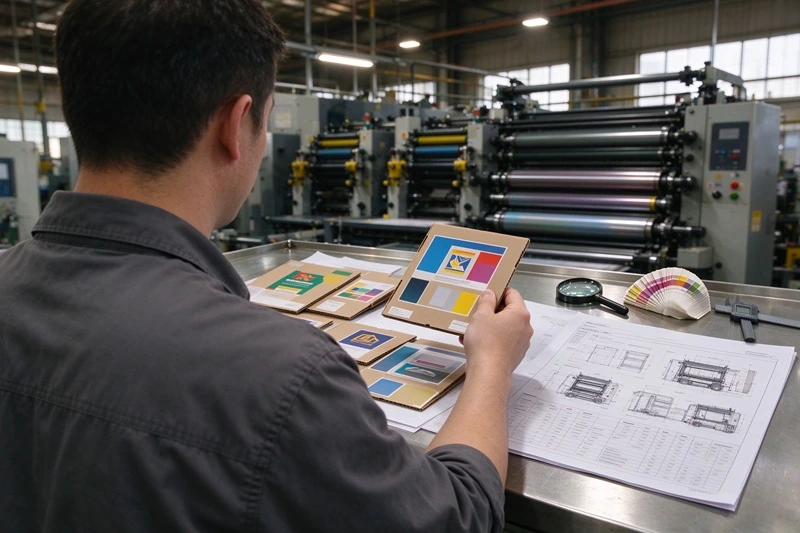
1. Board and Substrate Confirmation
Corrugated board is not a single material. It varies by flute profile, liner grade, and board thickness. Each variable affects how a flexo press performs.
What to confirm:
| Item | Why It Matters | What to Ask the Supplier |
| Flute type (A, B, C, E, F, BC, EB) | Flute height determines plate compression requirements and print pressure | Can the press handle your maximum and minimum flute heights without crush? |
| Liner grade (kraft, test liner, white top, coated) | Liner smoothness affects ink transfer and dot reproduction | What plate hardness and anilox specification work best for your liner? |
| Board thickness range | Feeder and print unit settings must accommodate the full range | What is the confirmed board thickness range for the feeder and print units? |
| Board moisture content | Moisture variation causes dimensional change and registration drift | Does the press include web or sheet tension compensation for moisture variation? |
| Maximum and minimum sheet size | Feeder and delivery must handle both extremes | Confirm that your largest and smallest blanks fit within the feeding range |
For corrugated board, printing plates typically range from 2.84 mm to 7.2 mm in thickness depending on the press type and whether the application is pre-print or post-print. Lower durometer plates can improve ink coverage on rougher liner surfaces, but all plates mounted on one cylinder should have the same durometer.
2. Print Quality Requirements
Print quality on corrugated board has practical limits that differ from film or coated paper. Setting the right expectations before purchase prevents disappointment after installation.
Registration tolerance
Flexo registration on corrugated board typically ranges from ±0.5 mm to ±1.5 mm for post-print applications, while preprint and high-graphic applications may achieve tighter tolerances depending on press configuration. If your customer requires registration tighter than ±0.5 mm on corrugated board, confirm that the press configuration includes servo-driven register control and CCD-based automatic compensation.
Color count and station layout
Count the number of print stations you need today, plus at least one additional station for future growth. Adding a station later is significantly more expensive than specifying it at purchase.
Ink coverage and solids
Large solid areas on corrugated board are more demanding than line work or text. Confirm that the anilox specification can deliver the ink volume required for your heaviest coverage. For corrugated applications, anilox rolls with higher cell volumes are generally used compared to coated substrates, to compensate for ink absorption.
What to confirm:
-
Required registration tolerance per color and color-to-color
-
Maximum ink coverage percentage in your typical jobs
-
Minimum dot size and line width your customers accept
-
Whether the press includes register pre-setting or job memory functions
3. Anilox and Plate System
The anilox roll and printing plate are the two components that most directly determine print quality. They must be specified as a matched system, not selected independently.
Anilox selection factors
| Parameter | What It Controls | Typical Corrugated Range |
| Cell volume (BCM) | Amount of ink delivered to the plate | Higher volumes for absorbent liners; lower for coated |
| Screen count (LPI) | Detail reproduction and smoothness | 200–400 LPI for corrugated post-print |
| Cell geometry | Ink release efficiency and consistency | 60° hex or 70° for high-volume applications |
| Roll hardness and coating | Wear resistance and cleaning life | Ceramic coating standard for production presses |
The correct anilox specification depends on plate LPI, ink strength, and substrate absorption. A mismatched anilox-plate combination is one of the most common causes of print density variation across a production run.
Plate considerations
For direct printing on corrugated board, photopolymer plates are standard. The plate thickness must match the press cylinder undercut. Plate mounting accuracy directly affects registration. Confirm that the supplier provides plate mounting equipment or a defined mounting procedure that achieves your required tolerance.
What to confirm:
-
Recommended anilox specification for your primary board and ink combination
-
Whether anilox rolls are supplied as standard or priced separately
-
Plate mounting method and achievable mounting tolerance
-
Availability of anilox cleaning systems (ultrasonic or chemical)
4. Press Configuration and Running Speed
Press type: unit type vs. CI type
For corrugated box production, the two main flexo press architectures are unit type (stack or inline) and central impression (CI). The choice depends on your product mix:
-
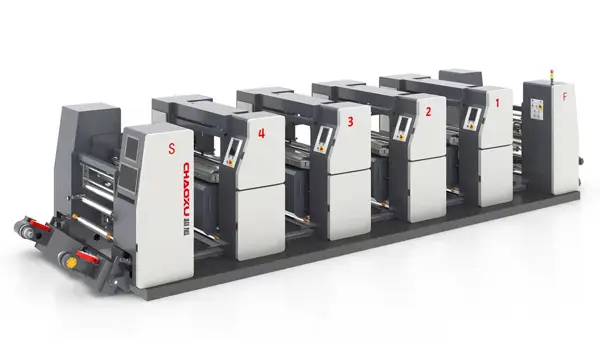
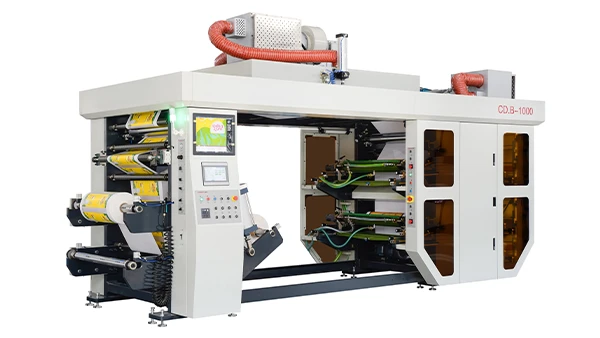
Unit type presses use separate impression cylinders at each station. They are generally more cost-effective for simpler work and are commonly used for corrugated post-print. Paper is dimensionally stable, so stack-type presses typically provide sufficient registration for corrugated production at lower cost and complexity.
-
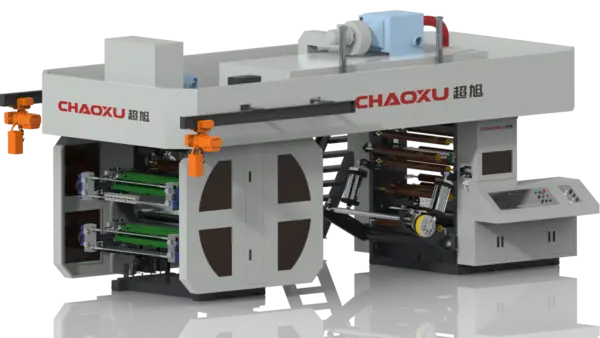
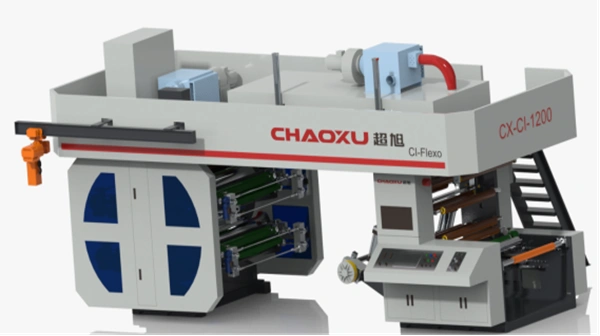
CI presses arrange print stations around a single large impression drum. They provide better registration on stretchy substrates, but for corrugated board the registration advantage is less critical than for film.
Running speed: the gap between spec and reality
Manufacturers quote maximum speed under optimal conditions. Your actual running speed will be lower. Factors that reduce achievable speed include:
-
Board quality variation (thickness, moisture, flatness)
-
Ink drying capacity for your coverage level
-
Operator skill and changeover frequency
-
Feeder reliability at maximum sheet size
What to confirm:
-
Confirmed running speed on board matching your specification
-
Speed reduction expected for your heaviest ink coverage
-
Changeover time between jobs (color count, plate change, anilox change)
-
Feeder and delivery rated capacity at your maximum sheet size
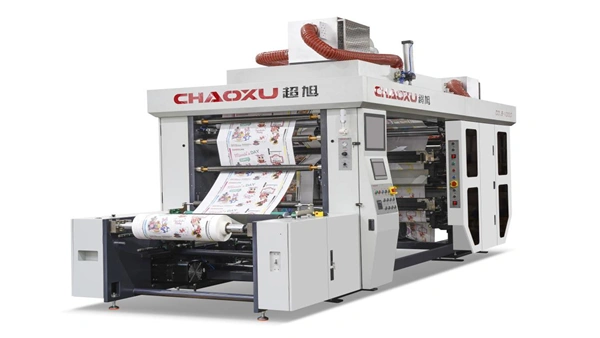
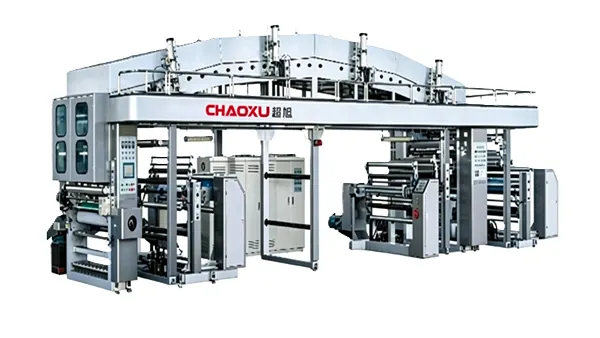
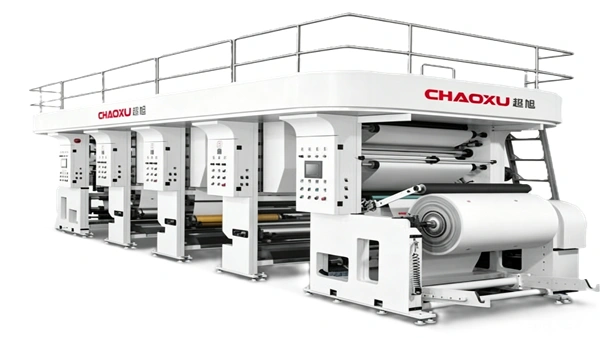
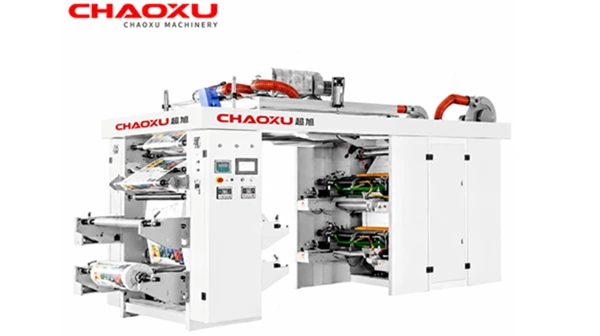
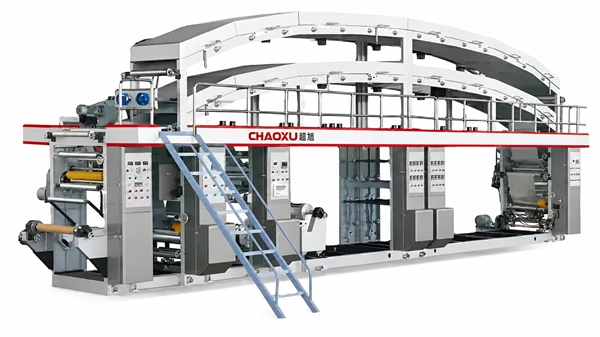
CHAOXU offers both unit-type and CI-type flexo presses. The unit type full servo flexographic printing machine supports corrugated carton preprint with a maximum print width of 1000–1600 mm and a register precision of ≤±0.1 mm. The CI type flexographic printing machine is configured for film and flexible packaging applications.
5. Installation, Utilities, and Running Cost Factors
Installation requirements
Before delivery, confirm the following site requirements:
-
Floor: Level foundation capable of supporting machine weight; minimum floor thickness varies by machine size
-
Power: Voltage, phase, and total connected load; confirm whether a transformer is required
-
Compressed air: Pressure and flow rate requirements
-
Ventilation: Exhaust requirements for ink solvents and drying systems
-
Ambient conditions: Temperature and humidity range for stable ink transfer and registration
Running cost factors
The purchase price is one component of total cost. Other factors include:
| Cost Category | What to Evaluate | Questions for the Supplier |
| Anilox rolls | Replacement frequency and cost | What is the expected anilox life under normal production? |
| Printing plates | Plate cost per color per design | Are plate costs included in any service agreement? |
| Ink consumption | Ink cost per 1,000 boxes at your coverage level | What ink type is recommended and what is the typical consumption? |
| Doctor blades | Replacement frequency | How often should doctor blades be replaced? |
| Energy | Dryer and drive power consumption | What is the connected load and typical running load? |
| Labor | Operator count and skill level required | How many operators are needed per shift? |
| Maintenance | Scheduled and unscheduled maintenance cost | What spare parts are recommended to keep on site? |
A practical press maintenance schedule for corrugated flexo includes daily cleaning of anilox rolls and doctor blades, weekly checks of tension systems, and monthly deep cleaning of anilox cells to prevent ink buildup that degrades print density over time.
Pre-Purchase Checklist: Quick Reference
Use this checklist during supplier discussions and factory visits:
Board and substrate
- Confirmed flute types and board thickness range
- Liner grade samples provided to supplier for testing
- Maximum and minimum sheet dimensions confirmed against feeder capacity
- Board moisture range documented
Print quality
- Registration tolerance requirement defined per color
- Maximum ink coverage percentage confirmed for typical jobs
- Minimum dot and line width requirements defined
- Test print on your board requested before purchase
Anilox and plate system
- Anilox specification matched to board and ink type
- Plate thickness and mounting method confirmed
- Anilox cleaning procedure defined
- Plate mounting tolerance agreed
Press configuration
- Press type (unit type vs. CI) matched to product mix
- Color station count includes growth capacity
- Running speed confirmed on board matching your specification
- Changeover time measured for typical job sequence
Installation and cost
- Site requirements documented (floor, power, air, ventilation)
- Total cost of ownership model prepared including consumables
- Spare parts list and recommended on-site inventory reviewed
- Operator training scope and duration confirmed
FAQ
What is the most important specification to check before buying a flexo press for corrugated boxes?
The board range — flute type, liner grade, and thickness — because it determines the feeder, print pressure, plate hardness, and anilox specification. A press that performs well on B-flute kraft liner may underperform on E-flute coated liner.
Can the same flexo press print both pre-print and post-print corrugated applications?
Not typically in the same configuration. Pre-print is done on the liner before corrugation, usually on a roll-fed press. Post-print is done on the finished board, usually on a sheet-fed press. The substrate condition, plate thickness, and press architecture differ between the two processes.
What registration tolerance is realistic for flexo printing on corrugated board?
For most post-print corrugated applications, ±0.5 mm to ±1.5 mm is a practical range. Tighter tolerances require servo-driven register control and automatic compensation systems. The achievable tolerance also depends on board quality variation and liner smoothness.
How many print stations should I specify?
Count your current maximum color requirement and add one station for future growth. Adding a station after installation costs significantly more than including it in the original order.
What anilox specification should I use for corrugated board?
Start with the ink coverage requirement and liner absorbency. Corrugated board absorbs more ink than coated paper, so higher cell volume anilox rolls are typically used. Confirm the specific LPI and BCM combination with your ink and plate supplier using test prints on your actual board.
How do I evaluate the real running speed of a flexo press?
Ask the supplier to demonstrate the press running your board specification at your typical coverage level. Measure the output over a continuous run of at least 30 minutes. Confirm the speed with the dryer operating at production temperature and the feeder at your maximum sheet size.
Conclusion
The most reliable way to avoid a purchase mistake is to confirm every specification against your actual board and production requirements — not against a general specification sheet. Three steps matter most: send your board samples to the supplier for testing, request a test print on your material before committing, and build a total cost model that includes consumables and maintenance, not just the machine price.
When you are ready to discuss your corrugated box production requirements, review the available flexographic printing machine configurations or share your board specification and print requirements with the engineering team for a configuration recommendation.