English
 عربي

Telescoping, starring and web breaks rarely share a single cause, but on a slitter rewinder they are all traceable through tension. Telescoping points most often to insufficient or inconsistent rewind tension taper; starring suggests excessive wound-in tension or uneven radial stress near the core; web breaks at the slit zone usually involve tension spikes, dull blades or damaged guide rolls. The diagnostic priority is to identify where in the roll the defect appears, then test tension settings before replacing mechanical components. This article provides a symptom-to-cause framework that operators and production engineers can apply without guessing.
Why These Three Defects Belong in One Diagnostic Framework
Telescoping, starring and web breaks are often treated as separate quality issues. In practice, they form a diagnostic cluster because each one is a different expression of the same underlying variable: how tension is distributed across the web width and through the roll diameter during rewinding.
Telescoping is an axial displacement—layers shift sideways beyond the roll edge. Starring is a radial buckling pattern near the core, appearing as a star-like collapse when viewed from the roll end. A web break is a tensile failure somewhere in the web path, most critically at the slit zone where every slit edge is a potential stress riser. Because all three respond to tension level, tension taper and web path stability, a single structured diagnosis sequence can address them together instead of treating each as an isolated fault.
Reading the Roll Before Touching the Machine
The first diagnostic step is not adjusting the tension controller. It is examining the finished roll or the break location. The position of the defect carries more diagnostic information than the defect itself.
Telescoping: where the layers shift matters
Telescoping that begins near the core is a different fault from telescoping that develops on the outer wraps. Core-area telescoping typically points to core alignment or chuck condition—if the core is not seated concentrically, the web lays unevenly from the first layer onward. Outer-wrap telescoping more often indicates a taper tension setpoint that is too low, meaning tension is not being reduced in a controlled way as roll diameter builds, or is not building sufficient interlayer friction.
A related distinction is between gradual telescoping that worsens from core to outside and a sudden lateral shift that appears at a specific diameter. The former is usually a tension taper profile issue; the latter may indicate a tension excursion or a web guiding event at that point in the run.
Starring: a radial stress signature
Starring appears as inward buckling near the core, often with a regular, petal-like pattern. It signals that compressive radial stress near the core has exceeded what the web structure can sustain without buckling. The common tension-side cause is excessively high wound-in tension, especially if the taper is insufficient to relieve tension as the roll builds, or if initial tension is set too high for a compressible or thin substrate. Starring can also emerge after the roll has been stored, if wound-in stresses relax unevenly.
Unlike telescoping, starring is not corrected by increasing tension. It usually requires reducing initial tension and reviewing the taper coefficient and the roll diameter detection system.
Web breaks: location tells the story
A web break at or just downstream of the slit zone directs attention to the slit edge and the blade. A dull or nicked blade tears rather than cuts, creating a micro-crack that propagates under tension. A break upstream of the slit zone, or at a guide roll, points instead to a tension spike, a seized dancer roller or a damaged roll surface.
Breaks that cluster at reel starts suggest a tension bump during acceleration or a roll-change sequence issue. Breaks that occur at a consistent running tension point suggest the tension setpoint itself exceeds the material's tensile capacity at that web width.
A Symptom-to-Cause Reference Table
The table below organizes the most common fault signatures against their likely tension-side and mechanical-side causes. It is intended as a first-pass triage reference, not a substitute for testing on the specific material and machine configuration.
| Defect signature | Likely tension-side cause | Likely mechanical / web-path cause | First adjustment to verify |
| Telescoping starting at core | Initial rewind tension too low; taper too low | Core chuck runout; core not seated squarely | Check core runout with dial indicator; confirm chuck alignment |
| Telescoping developing on outer wraps | Taper tension insufficient as roll diameter builds | Web guiding drifting; rider roll contact uneven | Increase taper in small increments; inspect rider roll crown and contact |
| Starring near core | Initial tension too high; taper coefficient too small | Roll diameter detection error; core too soft for wound-in stress | Reduce initial tension; verify diameter sensor reading |
| Web break at slit zone | Tension above material limit for the slit width | Dull or nicked blade; burr on guide roll | Inspect blades; reduce tension and observe break frequency |
| Web break upstream of slit zone | Tension spike from unwind surge or dancer seizure | Seized idler roll; damaged roll surface; splice | Check dancer roller freedom; inspect all rolls in web path |
| Interlayer slip combined with telescoping | Taper too aggressive (tension drops too fast) | Low web-to-web friction, especially slick films | Reduce taper and test interlayer stability |
Diagnostic Sequence: What to Check, in What Order
A practical fault diagnosis on a slitter rewinder should move from the least invasive check to the most invasive, and from tension parameters to mechanical components.
Step 1 — Record the defect position and roll diameter. Before changing anything, note where the telescoping or starring begins on the roll radius, or the machine-direction position of the web break. This single record prevents random parameter changes and makes the next test comparable.
Step 2 — Verify roll diameter feedback. Taper tension depends on the controller knowing the current rewind roll diameter. A misaligned proximity sensor or a loose connection can make the controller behave as if the roll is smaller or larger than it is, distorting the taper curve. Check the displayed diameter against a manual measurement before adjusting taper.
Step 3 — Review taper tension against material type. Taper is not a universal value. Thicker or stiffer materials generally require a larger taper to prevent inner-layer crushing, while thin films are more sensitive to initial tension and taper interaction. A commonly referenced starting direction is a gradual tension reduction as roll diameter increases, with the exact coefficient confirmed by trial rolls on the actual material.
Step 4 — Check core alignment and chuck condition. For core-area defects, measure core runout. Excessive runout prevents the web from laying concentrically regardless of tension settings. Confirm that chucks are clean, seated and applying uniform grip.
Step 5 — Inspect blades for the slit-zone break pattern. If breaks concentrate at the slit zone, stop the machine, lock out, and inspect every blade position. A single nicked blade can initiate edge cracks that propagate into a full break. Blade inspection is not a tension adjustment and should not be deferred while changing tension setpoints.
Step 6 — Audit the web path for nicks, burrs and seized rollers. Run a gloved hand along guide rolls, idler rolls and spreader rolls to detect surface damage. A raised burr or a seized dancer roller creates a localized tension disturbance that no controller setting can compensate for.
Step 7 — Re-test with one variable at a time. After each adjustment, run a full test roll or a defined production set and inspect the defect position again. Changing taper, initial tension and blade condition simultaneously makes it impossible to know which change worked. Small, isolated increments produce usable diagnostic information.
Taper Tension Adjustment: What Changes, and What Does Not
Taper tension is the deliberate reduction of rewind tension as roll diameter increases. Its purpose is to prevent the inner layers from being crushed by the accumulating radial stress of outer layers. On a slitter rewinder processing thin films, paper or adhesive materials, taper is the parameter most directly linked to telescoping and starring.
A taper setpoint that is too low (tension staying high as the roll builds) increases interlayer pressure and can contribute to starring or, in severe cases, core crush. A taper that is too aggressive (tension dropping too quickly) reduces interlayer friction and can allow layers to slip, producing telescoping or a soft, unstable roll. The correct direction is material-dependent: compressible or slick webs may need a different taper response than stiff paper or foil.
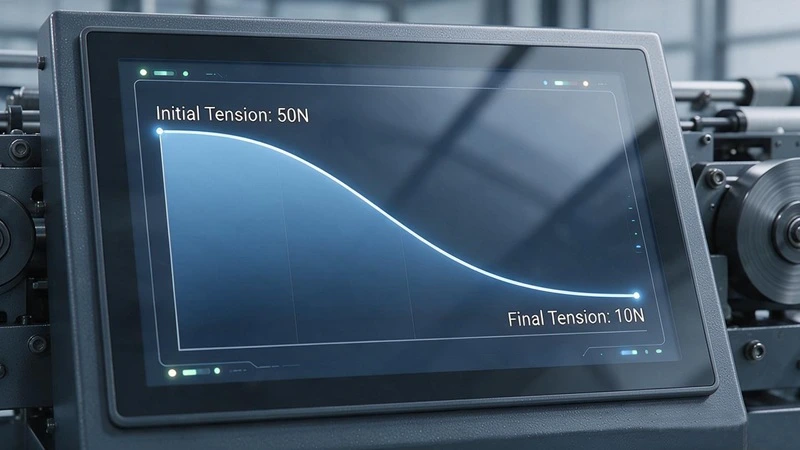
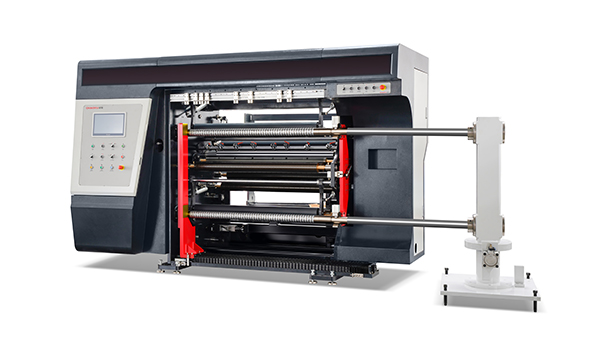
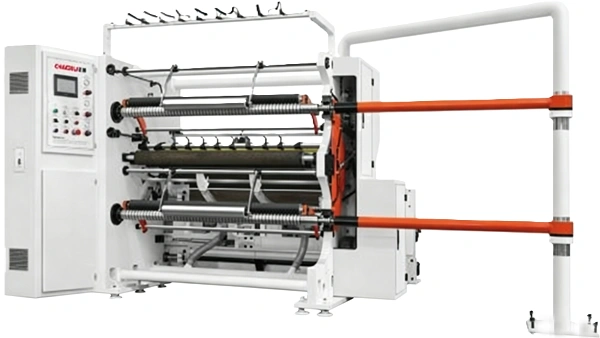
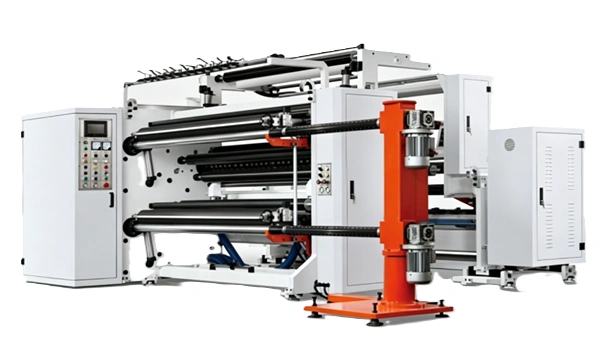
For buyers evaluating a slitter rewinder, the relevant confirmation is not whether the machine “has taper tension,” but whether the taper can be set in small increments, whether roll diameter feedback is reliable, and whether the controller allows separate initial and final tension values. These are configuration questions that should be discussed against the actual material mix. The available slitting machine configurations can be reviewed against specific material and roll-diameter requirements.
Material Differences That Change the Diagnosis
The same defect signature does not always point to the same cause across materials.
On thin BOPP, PET or CPP films, starring is more likely to emerge from excessive initial tension, because thin films have limited compressive tolerance near the core. Telescoping on slick films can occur even at otherwise acceptable tension if interlayer friction is low. Web breaks on thin films at the slit zone are often blade-initiated because a small nick creates a stress concentration that the low web thickness cannot tolerate.
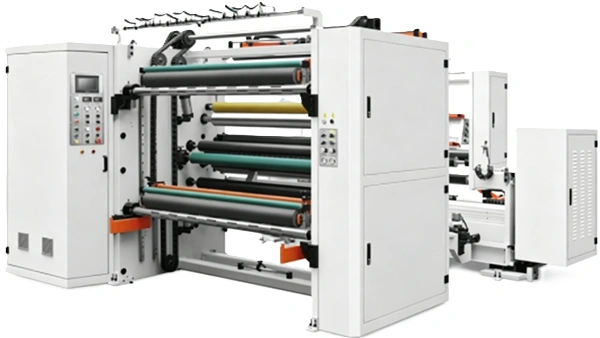
On paper and paperboard, telescoping is more frequently associated with uneven tension across the web width or with a rider roll that is not applying uniform contact. Starring is less common than on film but can occur if the paper is wound at high tension with insufficient taper. Web breaks on paper may also originate from edge cracks or splices in the incoming reel rather than from the slitting operation itself. A paper slitting and rewinding configuration with separate unwind and rewind tension control provides more adjustment range for these material differences than a single shared tension setpoint. Buyers processing mixed paper and film should confirm whether the machine allows independent tension profiles for each section.
On adhesive and laminated materials, interlayer slip and telescoping can be influenced by the adhesive's response to winding pressure and temperature. Tension settings that work for a non-adhesive film of similar thickness may not produce a stable roll on an adhesive-faced material.
Maintenance and Pre-Run Checks That Reduce Fault Frequency
Many tension faults are not sudden failures but the cumulative result of small mechanical deteriorations. The checklist below is designed for routine pre-run verification rather than reactive troubleshooting.
- Core chucks and shafts: confirm concentric seating; check for wear or contamination that prevents square core mounting.
- Roll diameter sensor or proximity switch: confirm reading against a manual diameter measurement; check wiring and mounting security.
- Blade holders and blade edges: inspect for nicks, dullness or contamination before each production set; replace damaged blades rather than increasing tension to compensate.
- Guide rolls, idler rolls and dancer rollers: check for free rotation, surface nicks and burrs; confirm dancer movement is not restricted.
- Web guiding sensors: confirm the guide is tracking to the core center, not hunting or drifting at the travel limit.
- Tension controller calibration: verify that the displayed tension corresponds to an actual measured value, especially after a material or recipe change.
- Rider roll contact: confirm uniform contact across the roll width; a crowned or worn rider roll applies uneven tension.
The web tension control principles that underpin these checks are covered in more depth in the existing tension control overview; the checklist above translates those principles into component-level inspection points.
When the Fault Is Not Tension
Tension diagnosis has limits. Some telescoping and starring defects persist after tension parameters have been verified because the root cause is dimensional or structural: a core whose inside diameter is out of tolerance, a rewind shaft with excessive runout, or a web that has significant caliper variation across its width. These conditions change how the web stacks layer upon layer, and no controller setting can fully compensate for a mechanical or material input that is not uniform.
A practical rule is that if the defect position is consistent across multiple rolls at the same diameter, and tension taper, core alignment and blade condition have all been verified, the next step is to measure the incoming material and the rewind shaft itself. Fault diagnosis should not become an endless tension adjustment when the tension system is reporting correctly and the mechanical inputs are not.
Frequently Asked Questions
What is the difference between telescoping and starring on a slit roll?
Telescoping is lateral—layers shift sideways beyond the roll edge, making the roll face uneven. Starring is radial—layers near the core buckle inward in a star-like pattern when viewed from the end. Telescoping is most often linked to tension taper or core alignment; starring is most often linked to excessive wound-in tension or uneven radial stress.
Does increasing rewind tension fix telescoping?
Usually not. Telescoping is more commonly caused by insufficient taper tension as the roll builds, or by core misalignment. Increasing tension without correcting taper or alignment can worsen starring and increase the risk of web breaks. The taper profile and core runout should be verified before raising the overall tension setpoint.
Why do web breaks concentrate at the slit zone?
The slit edge is the thinnest and most stressed part of the web. A dull or nicked blade tears the material rather than cutting it cleanly, creating a micro-crack that propagates under tension. A burr on a guide roll just downstream of the slit zone can create the same effect. Blade condition and web-path surface condition should be inspected before attributing slit-zone breaks to tension alone.
How do I know if my taper tension is set too low or too high?
If the roll is hard near the core and starring or core crush appears, taper may be too low (tension not dropping enough as diameter builds). If the outer wraps are loose, layers slip, or the roll feels soft at the outside, taper may be too aggressive. The correct taper is confirmed by trial rolls on the actual material, not by a single universal coefficient.
Can a slitter rewinder run paper and film with the same tension settings?
Generally no. Paper and thin films respond differently to initial tension, taper and interlayer pressure. A machine configured with independent unwind and rewind tension control can store separate recipes, but the settings should still be confirmed by test runs for each material family. Using a film recipe on paper, or the reverse, is a common source of avoidable roll defects.
What should I check first when a roll shows both telescoping and starring?
Start with the defect position. If telescoping begins near the core and starring is also core-concentrated, check core alignment and runout first, because a misaligned core can produce both signatures. If telescoping develops on the outer wraps, verify taper tension before inspecting the core. A roll with both defects at different radii may have more than one contributing cause.
Conclusion
Telescoping, starring and web breaks are not three unrelated quality problems. They are three readouts of how tension has been distributed through the roll and across the web path. The most reliable diagnostic sequence is to record the defect position first, then verify roll diameter feedback, taper settings, core alignment and blade condition in that order. Tension parameters should be tested in small isolated increments, not changed in batches.
The most common mistake is treating every roll defect as a tension setpoint problem. If taper and core alignment have been verified and the defect signature remains consistent, the cause may be dimensional—core runout, shaft condition or material caliper variation—and further tension adjustment will not resolve it.
For production teams reviewing whether their current slitter rewinder provides enough tension adjustment range for their material mix, the available slitting machine configurations can be checked against specific roll diameters, substrate types and taper control requirements. A technical confirmation against actual material samples is the appropriate next step before specifying a machine or a tension control upgrade.