English
 عربي
عربي 
Last summer, a plant manager in Ohio called me in frustration. His team was losing an average of 1,200 linear meters of film per shift just from registration drift during acceleration. The mechanics had shimmed gears, replaced bearings, and tightened everything that could be tightened, yet the waste number wouldn’t budge. The root cause wasn’t mechanical slop — it was the inherent latency in the line-shaft drive system.
That conversation reflects a shift happening across the converting industry. With average job run lengths dropping by nearly 40% over the last decade (according to TLMI market data), printers are being asked to handle more changeovers, lighter substrates, and tighter color-to-color tolerances than ever before. The mechanical drive trains that built the industry are now becoming the main bottleneck. That’s why understanding what happens when you replace rigid shafts and gears with independent servo axes isn’t just an engineering discussion — it’s a margin conversation.
Where Traditional Drives Hit the Wall
In a conventional gear-driven press, one main motor turns a long shaft that distributes power to each print station via mechanical couplings. Speed changes travel through the entire train, and every gear tooth introduces a tiny phase shift. At 300 m/min, those micro-delays translate to misregistration between colors. Operators compensate by running make-ready waste until the image stabilizes, often discarding 200-400 meters on every restart.
Substrate sensitivity compounds the problem. Thin LDPE films stretch under tension variations caused by gear backlash. Light-gauge aluminum liners develop creasing when acceleration curves can’t be fine-tuned individually. On any given day, these limitations silently cap throughput and drive up the “hidden” scrap that goes straight to the recycling baler.
How Individual Axis Control Changes the Equation
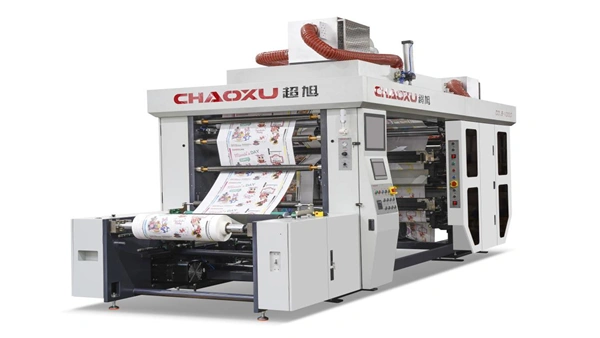
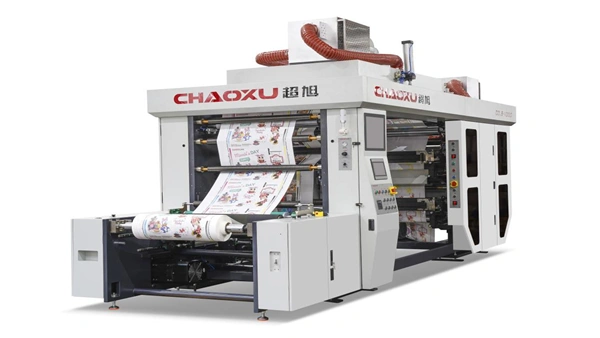
Replacing a mechanical line shaft with independent AC servo motors at each print deck flips the model. Every axis — plate cylinder, anilox roll, impression roller — can accelerate and decelerate on its own electronic cam profile, synchronized via a fiber-optic motion bus rather than physical iron. The practical outcome: closed-loop registration corrections happen within a single revolution, not over several meters of substrate.
A printed packaging converter I spoke with last year documented the impact after upgrading to servo-driven web processing equipment. Their average registration-related waste dropped from 320 meters per job to just under 60 meters, which annualized to roughly 18 tonnes of film saved. The investment payback came in 14 months purely from substrate savings, before counting the extra capacity they gained from faster changeovers.
Several concrete differences stand out in daily production:
-
Instantaneous re-registration after a stop. A servo press holds the phasing in the drive’s memory, so the first impression after restart is often salable.
-
Pre-set tension zones per substrate. Operators store recipes for 12-micron PET, 30-micron BOPP, or paperboard, and the drives automatically adapt the infeed, outfeed, and inter-deck tensions.
-
De-coupled maintenance. A mechanical problem at one station doesn’t force the entire line to run with a compromise setup.
These capabilities matter most where job variety is high. Short-run label converters, in particular, see disproportionate gains because the make-ready time shrinks from minutes to seconds. If you’re evaluating options for handling thinner substrates without sacrificing line speed, exploring servo-driven printing systems for flexible materials is a natural next step.
Key Comparison: Mechanical vs. Servo Drive Architecture
| Dimension | Conventional Line-Shaft | Fully Servo-Driven Platform |
| Registration correction | Mechanical differentials; manual phase adjustment | Electronic camming; sub-impression correction |
| Make-ready waste (typical) | 200-400 m per restart | 40-80 m per restart |
| Tension control granularity | Global adjustment via dancer rollers | Independent zone settings stored per SKU |
| Mechanical wear points | Gears, shafts, clutches, universal joints | Minimal; direct-drive eliminates most wearing parts |
| Job recall | Manual notes and trial pulls | Recipe-driven; parameters loaded automatically |
The table underscores why the conversation has moved from “Should we consider servo?” to “How many axes do we need for our current mix?” For converters running multiple short runs daily, the break-even on a servo platform often arrives much faster than what simple capex calculations suggest.
What to Look for When You’re Comparing Platforms
Not all servo architectures are alike. The motion controller’s bus speed, the resolution of the feedback encoders, and the mechanical stiffness of the frame all interact. A helpful framework when talking with vendors covers four areas:
-
Bus cycle time. For high-speed work above 400 m/min, a bus cycle under 1 millisecond helps maintain color-to-color registration on thin films.
-
Direct-drive vs. belt-coupled motors. Direct-drive eliminates belt backlash entirely, which becomes critical on unsupported film.
-
Tension transducer placement. Load cells mounted as close to the print nip as possible, not just on idler rolls, give the drive system the fastest tension feedback.
-
Recipe management integration. The real productivity gain comes from storing and recalling full job parameters — not just speeds, but impression pressures, dryer temperatures, and corona treatment levels.
When evaluating whether your current substrate range justifies a move to servo architecture, it helps to ask your team one simple question: “How many meters per shift do we run that never get invoiced?” The answer often clarifies the economics faster than any spec sheet comparison.
Closing the Loop: Turning Technology Into Margins
The shift to servo-driven print decks isn’t just about keeping up with technology trends. It directly addresses the three costs that keep converting business owners awake at night: substrate waste, skilled operator dependency, and the lost margin from runs that are too short to accept. As brand owners demand faster turnaround and thinner, more sustainable packaging materials, the ability to lock in registration instantly and recall job recipes with a single tap moves from a differentiator to a baseline requirement.
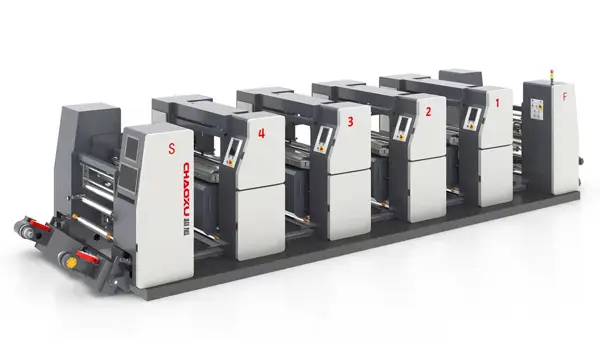
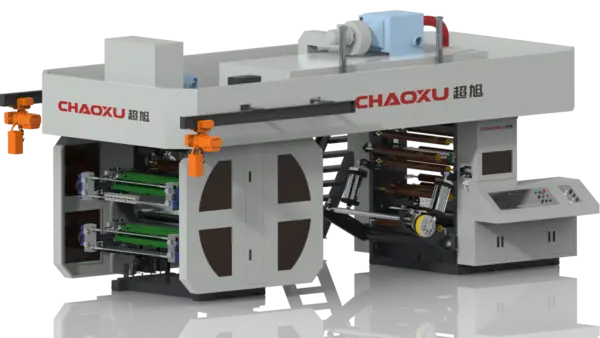
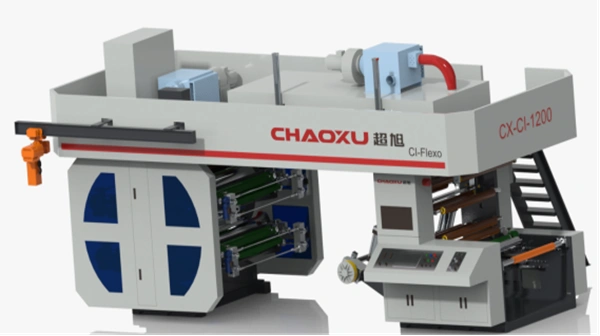
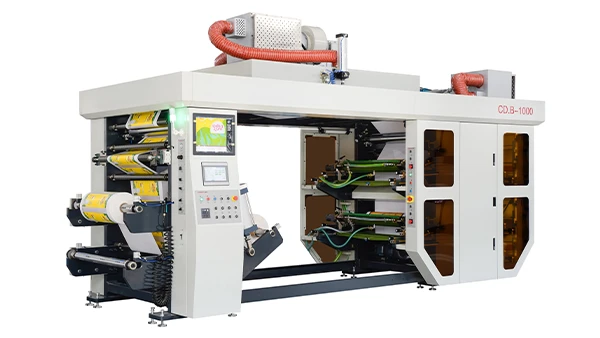
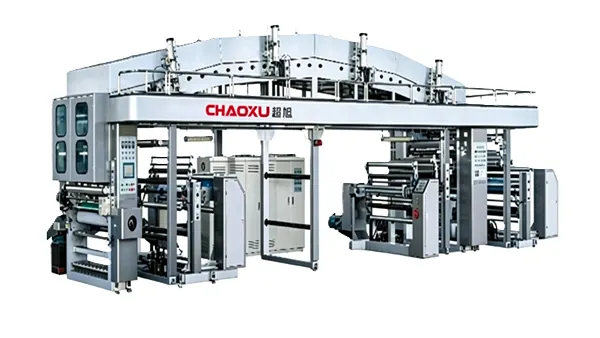
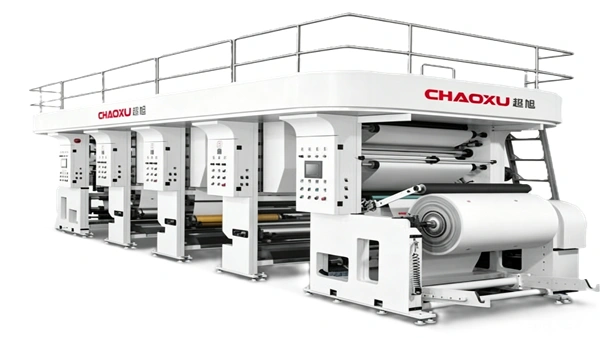
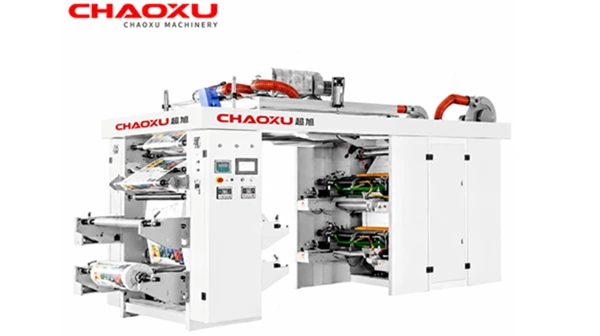
If you’re curious about what a modern system looks like on the production floor, you can view available configurations of Chaoxu’s servo-integrated press series. These platforms are built specifically for converters dealing with high-mix, short-run production and challenging substrates — exactly the kind of environment where mechanical drives start to show their age. For a deeper look at how a specific tooling layout maps to your product portfolio, request a personalized configuration analysis and the engineering team can walk you through the axis mapping, drying capacity, and recipe-handling logic that fits your current shop floor reality.