English
 عربي
عربي 
It’s Tuesday morning at a mid-size label converting plant in Ohio. The production manager stares at two equipment specs laid out on his desk—one quotes a single servo press, the other a full servo model. He remembers last month’s nightmare: a 7-color job on gloss film that took 45 minutes to get into register, ate 900 feet of substrate in set-up, and still shipped late. His gut says servo technology can fix this, but the price gap between “single” and “full” servo is wider than he expected. Do they really need all axes controlled independently, or is one smart servo enough? If this sounds familiar, you’re not alone. According to a 2023 FTA survey, the number one factor driving flexo equipment upgrades is the need to reduce setup waste and shorten changeover times on increasingly fragmented job runs. This decision isn’t just about a motor count—it’s about matching drive architecture to the real business mix coming through your door.
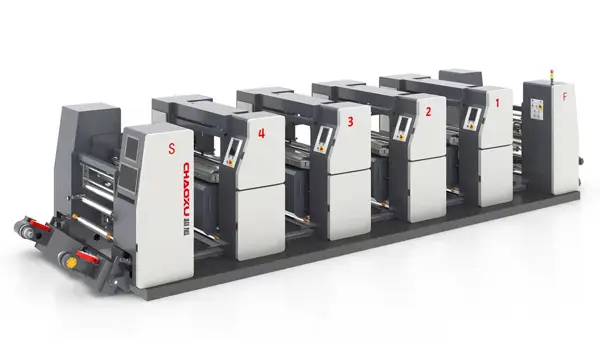
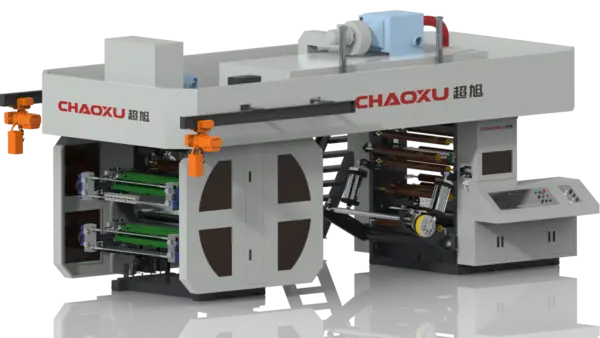
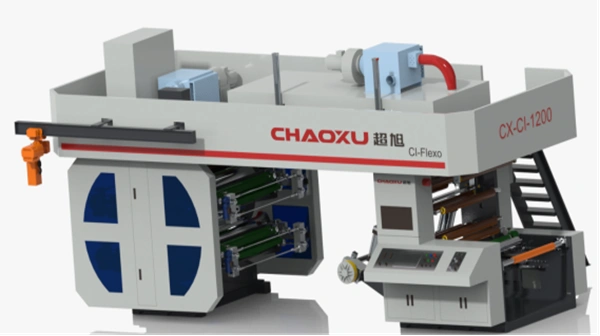
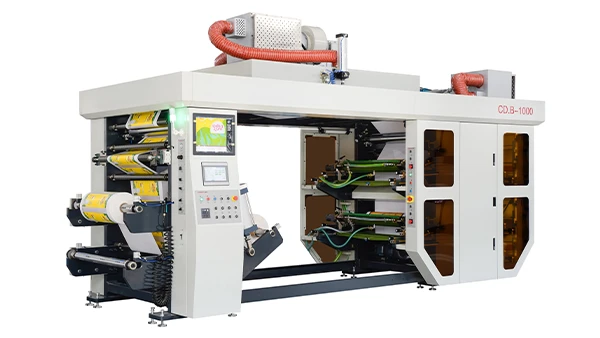
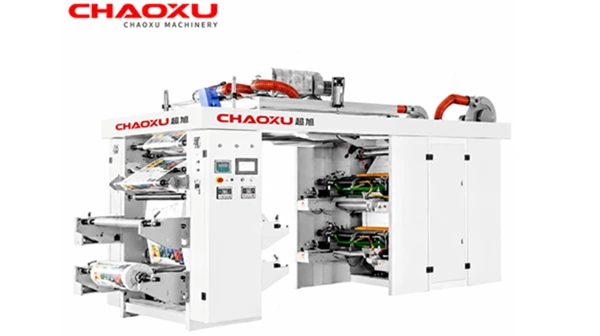
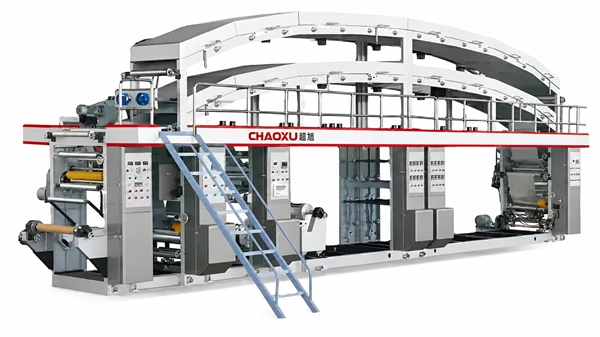
Before looking at the technology, it helps to level-set what we’re actually comparing. In a single servo configuration, one precision motor typically drives the central impression (CI) drum or a main line shaft, while individual print decks are mechanically geared off that master drive. Some designs also servo-control the chill drum or rewind independently, but the core idea is limited servo axes. A full servo press replaces mechanical linkages with independent motors on every print station, plus anilox and meter rolls in many cases, all synchronized through a digital control system rather than gears. This isn’t just a nuance for engineers—it directly affects how your operators set up a job on Monday morning and how much substrate ends up on the floor.
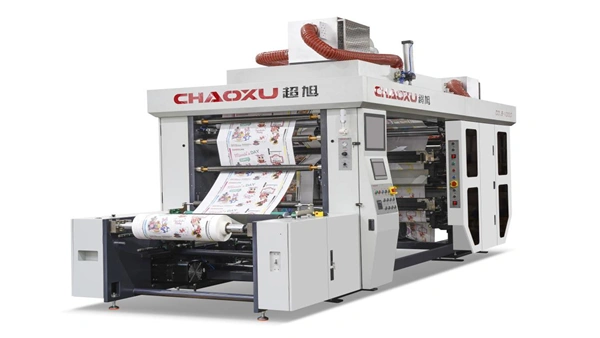
When converters talk about the benefits of servo-driven architectures, the conversation almost always starts with make-ready waste and time. A flexible packaging printer in the Midwest tracked their job changeovers for six months after switching to a full servo platform. Their average 8-color changeover—including plate sleeve changes, washup, and registration—dropped from 38 minutes to just over 14 minutes. The reason? Each print station can be set independently, pre-registered offline, and ramped into position without dragging the entire gear train along. Single servo systems can also improve on pure mechanical machines, particularly when equipped with smart pre-register, but they still rely on geared connections between decks. If you’re running 15–20 short-run jobs a day, that time delta quickly adds up to an extra shift’s worth of productive printing per week. The FTA’s FIRST guidelines now explicitly call out “independent servo drives on print stations” as a recognized way to meet the waste reduction targets many brand owners require. If your workflow increasingly demands a modern web-fed printing approach for quick-turn labels , the math tends to favor a more independent architecture.
But not every converter needs maximum flexibility. There’s an application sweet spot where a well-designed single servo press delivers exceptional value. Think of a dedicated line running 3- or 4-color process work on standard face stocks, with a handful of repeat job sizes and limited substrate changes. A converter specializing in logistics labels, for example, might run the same few SKUs week after week. Here, the extreme make-ready speed of full servo is less critical; what matters more is print consistency at high throughput and a lower total capital outlay. Single servo architectures can hold register beautifully on stable films and paper once dialed in, and their simpler maintenance profile is genuinely appreciated by smaller maintenance teams. The key is being honest about your job variety—not the variety you’d like to have in two years, but the actual mix that generates today’s revenue. For shops where 80% of volume comes from 20% of repeat jobs, the cost-effective servo upgrade path may be exactly what the bottom line needs.
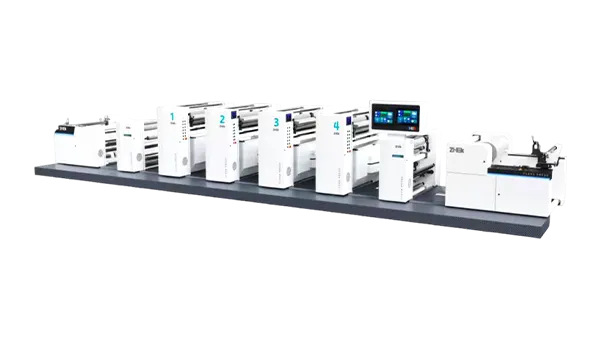
To help frame the choice, let’s put the core trade-offs side by side:
| Criteria | Single Servo Flexo Press | Full Servo Flexo Press |
| Make-ready time | Good—faster than mechanical, but still requires geared station synchronization | Excellent—independent station setup enables sub-15-minute changes |
| Substrate flexibility | Works best with stable films, paper, and board | Handles extensible films, thin liners, and tricky substrates with precision tension control |
| Short-run economics | Economical for dedicated medium/long runs | Excels at ultra-short runs where changeover is the bottleneck |
| Capital investment | Moderate | Higher upfront, often justified by labor and waste savings |
| Maintenance complexity | Lower—fewer motors and drives | Higher—more servo drives and feedback systems, but diagnostic tools are robust |
| Scalability | Limited station independence; hardware upgrade sometimes needed | Software-configurable for adding print stations, cold foil, or screen units |
If you squint at this table long enough, you’ll notice the decision pivots less on “which is better” and more on “what problem are you solving?” A converter drowning in short-run SKUs with margins compressed by substrate waste needs full servo. A converter seeking reliability and a step-change improvement from a purely mechanical press, without the capital stretch, may find the single servo exactly right. The most costly mistake I see is paying for full servo capability and then running it like a mechanical press—operators not using pre-register tools, ignoring tension recipes, leaving savings on the table. The second most costly? Buying a single servo press to chase a market that has already moved to 500-label orders.
There’s another dimension worth factoring in: your operators’ skills and your training infrastructure. Full servo presses are incredibly capable, but they require a different mindset. The ability to save and recall job parameters for every substrate, sleeve, and ink set is powerful only if your team builds and maintains that library. I’ve visited plants where the press has over 2,000 stored job recipes, and changeover is almost fully automated; I’ve also seen full servo machines treated as just another press because no one took the time to learn the automation. When evaluating equipment, ask suppliers about the learning curve and what support they offer during the first 90 days. Some manufacturers now provide remote diagnostics and on-screen operator guidance systems that make advanced servo features far more accessible. This support layer can make or break your return on investment, regardless of which architecture you choose. For operations considering a switch to machinery specifically engineered for fast-ramping narrow web production , this support aspect is often undervalued until it’s too late.
So where does this leave the production manager in Ohio? He eventually charted his last 200 jobs by run length, number of colors, and substrate type. Over 60% of his volume came from jobs under 5,000 linear feet, many on clear film with tight register tolerances. The data steered him toward full servo—but he also allocated budget for three days of on-site operator training before acceptance. Those first three months still had hiccups, but the training investment meant they hit the 15-minute changeover target within the first quarter, not the first year.
That approach—pairing the right drive architecture with a deliberate ramp-up plan—turns a confusing spec comparison into a business decision you can defend with real numbers. If you want to evaluate your options more concretely, consider building a simple matrix: plot your top 50 jobs by annual volume, note the average run length and substrate variety, then match that against the capabilities outlined in the table above. If you’d prefer a guided walkthrough based on your actual production data, Chaoxu’s application team offers a tailored configuration assessment for label and flexible packaging workflows —they can help map your current job mix to specific drive and automation requirements without pushing you into a one-size-fits-all solution.
Whichever path you choose, the shift toward servo-driven converting is no longer a question of “if” but “how much.” Raw material costs keep climbing, labor is tight, and brand owners are asking for smaller, more frequent deliveries. The right drive architecture—single servo or full servo—gives you a tangible lever to protect margins while delivering the agility your customers now expect. The only wrong move is to delay the decision because the spec sheet looks too technical. Break it down by your own jobs, visit running installations, and don’t underestimate the value of training. That’s how you turn a spec war into a clear next step for your business.
Disclaimer: The job changeover statistics and scenarios referenced in this article are based on publicly reported industry benchmarks (FTA, TLMI) and anonymized user experiences. Individual results may vary depending on job mix, operator skill, and substrate characteristics.