English
 عربي
عربي 
You run a tight converting operation. The stacks of lightweight kraft, greaseproof paper, or glassine sit on the floor, waiting to become sandwich wraps, bakery sheets, or burger liners. The order says “vibrant colors, no odor, food-safe, 500,000 impressions by Thursday.” And suddenly, the printing method you’ve always used starts to show its limits.
Food wrapper paper sits at a tricky intersection. It’s often thin and heat-sensitive, needs inks that won’t migrate through the substrate, and demands high-volume output without sacrificing sharp text or halftone dots. With tightening food-contact regulations and retailers demanding shorter lead times, the pressure is on to pick a technology that actually checks every box. For a growing number of converters, the answer lies in a modern approach to an established process—and in inline press configurations that handle thin, flexible materials without breaking the web.
Let’s unpack why this printing method has become the de facto choice for food wrapper applications, and where it outperforms the alternatives in real production environments.
The Unique Demands of Food Wrapper Paper
Before comparing technologies, it pays to understand what the substrate itself asks for. Food wrapper paper typically falls between 18 and 60 gsm—thinner than typical label stock—and it often carries a functional coating (grease-resistant, release, or heat-seal). This combination creates three core challenges:
-
Ink migration risk. Anything printed on the outside can potentially transfer to the food side through the paper’s porous structure. Regulatory bodies like the FDA (21 CFR 176.170) and the EU’s Framework Regulation (EC) No 1935/2004 set strict limits on specific migration. Using low-migration, water-based inks becomes non-negotiable—and not every printing process handles these ink systems gracefully.
-
Substrate sensitivity. Thin, extensible papers stretch under tension and curl when exposed to heat. A printing method that relies on high drying temperatures or excessive web tension will cause registration errors and waste.
-
Short-run economics. A typical sandwich wrap order may be 50,000–200,000 impressions—too long for digital, too short for gravure to amortize cylinder costs.
These demands push converters toward a process that combines fast changeover, low-temperature drying, and full compatibility with water-based and low-migration ink chemistries.
Flexo vs. Gravure, Offset, and Digital: A Practical Comparison
When I visit converting plants, the whiteboard in the production office usually has one question scribbled at the top: “Should we move this job to a different press?” The answer depends on how each technology handles the food-wrapper triad of safety, quality, and cost.
| Factor | Flexo | Gravure | Sheetfed Offset | Digital (toner/inkjet) |
| Food-safe ink compatibility | Excellent—natively runs water-based, low-migration inks with no chemistry rework | Fair—solvent-based inks dominate; low-migration grades exist but dry slower | Limited—requires specialty coatings and low-migration inks that can upset ink-water balance | Varies—many digital inks are not cleared for indirect food contact; some inkjet systems use low-migration fluids but at a premium |
| Substrate range | Handles 12–80 gsm papers, films, and laminates; forgiving to porous stocks | Excellent for films; less suited to very thin, rough paper because of image skip on microscopic highs and lows | Runs sheets, not webs; wrapper paper is typically converted from rolls, adding an off-line sheeting step | Limited by heat tolerance and surface energy; thin papers can jam or curl in fuser units |
| Makeready time & cost | Plate cost moderate; quick-change systems allow job swap in 15–25 minutes | Cylinder cost high; makeready can take 1–2 hours; viable only for long runs | Plate cost low but press makeready on thin stock is an art; run speed drops to avoid tail whip | No plates, instant changeover; click cost high for coverage-heavy wrapper designs |
| Print quality | 175–200 LPI easily achievable with modern anilox and plate technology; consistent solid coverage | Highest ink density and color gamut; best for process work on films | Sharp text and tone reproduction but struggle with large solid areas on porous stock | Quality improving; fine for text and spot color, but solids can show banding |
| Throughput | 300–500 m/min typical on CI presses for light paper | 250–400 m/min but with much longer setup | 6,000–12,000 sheets/h; converting roll to sheet adds cost | 20–80 m/min; not viable for million-impression orders |
A gravure cylinder set for a five-color wrapper design can easily cost $5,000–$8,000. You need runs in the millions to justify that investment. At the opposite extreme, a toner-based digital press will print a lovely sample but becomes prohibitively expensive once ink coverage exceeds 30% of the page—which most colorful wrapper designs do. For the vast middle ground where most food wrapper jobs live, the printing systems optimized for water-based, low-migration ink provide the clearest economic fit.
The Quiet Revolution in Water-Based Ink Performance
If you tried running water-based inks on thin paper a decade ago, you likely remember curled edges, slow drying, and clogged anilox cells. That picture has changed radically. Today’s formulations—from suppliers like Flint Group and Siegwerk—dry almost instantly on modern inter-color drying units, even at 400 m/min. They also meet the strictest low-migration standards, including the Swiss Ordinance RS 817.023.21 and the Nestlé Guidance Note on Packaging Inks.
What does this mean for a food wrapper converter? You can now print crisp text, fine barcodes, and process-color halftones on 22 gsm greaseproof without the web puckering or the ink transferring to the backside of the reel. The secret is the synergy between the water-based ink chemistry and the press’s ability to deliver exactly the right anilox volume, plate pressure, and hot-air velocity—a level of control that sheetfed offset simply cannot offer on non-absorbent, coated papers.
The Link Between Press Architecture and Waste Reduction
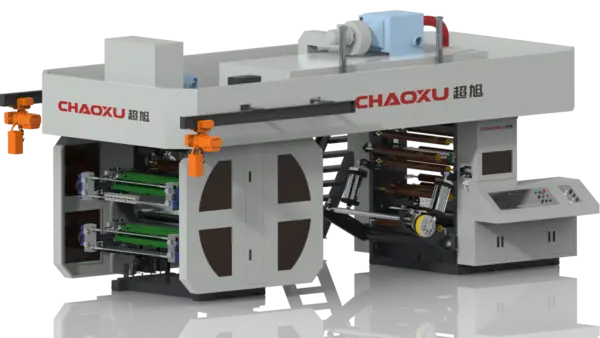
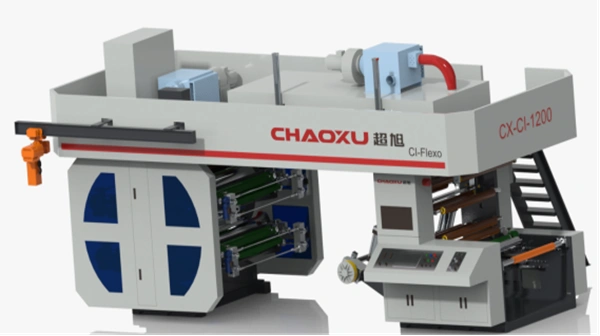
Food wrapper margins are razor-thin. The difference between profit and loss often comes down to substrate waste during setup and splices. A central impression (CI) drum design—where the web wraps around a single, temperature-controlled cylinder—delivers a decisive advantage here. Because the paper stays locked to one common impression surface through all color stations, registration remains stable even with the inevitable gauge-band variation that comes with lightweight kraft.
One plant manager in the Midwest told me they reduced setup waste from 800 impressions to under 200 after switching to a CI press with servo-driven deck positioning. That’s roughly 3,000 square meters of saved paper per week on a single shift—paper that would otherwise go straight to the recycling baler. When you combine that with integrated web guiding and auto-register systems that keep the substrate tracking perfectly through the dryer, the waste reduction becomes a structural cost advantage, not a one-time gain.
How to Evaluate a Machine for Your Wrapper Applications
If you’re considering an equipment upgrade, here are the features that matter most for food wrapper paper, in order of impact:
-
Dryer capacity. Look for inter-color hot-air knives or near-infrared boosters that can deliver high evaporation rates at web temperatures below 80°C. Too much heat, and the paper dries out, embrittles, or loses its grease-resistant properties.
-
Web tension control. A closed-loop tension system with load-cell feedback at the unwind, infeed, and rewind is non-negotiable for papers under 30 gsm. Even a 2% tension spike can cause a web break on a 400 m/min line.
-
Quick-change plate and anilox systems. Sleeve-based setups that allow a full job changeover in under 25 minutes let you profitably handle runs as short as 20,000 impressions—opening up a whole segment of premium, short-run food wrapper clients.
-
Food-safe material handling. Stainless steel ink trays, FDA-compliant wash-up hoses, and enclosed doctor blade chambers help you maintain the chain of custody required by major food brands’ audit protocols.
Spending a few extra hours evaluating these points during a factory acceptance test often prevents years of frustration. And if you want to skip some of the guesswork, you can explore pre-configured food-grade printing and converting lines that already incorporate these safeguards.
A Smarter Way Forward for Converters
Food wrapper paper seems like a simple product, but it punishes the wrong choice of printing technology more than any film or board ever will. The substrate is fragile, the ink regulations are unforgiving, and the run lengths sit in a sweet spot that demands both fast setup and consistent, high-speed output.
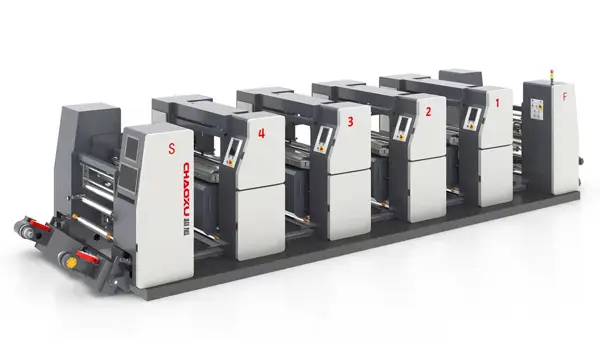
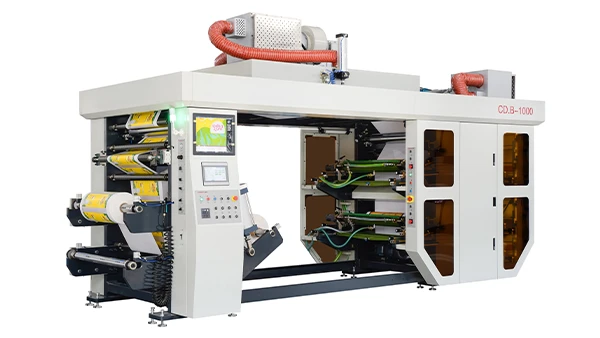
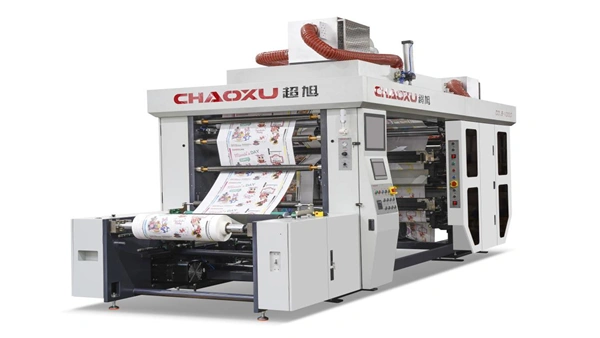
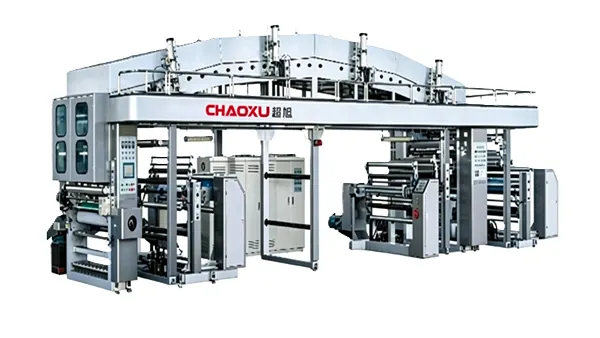
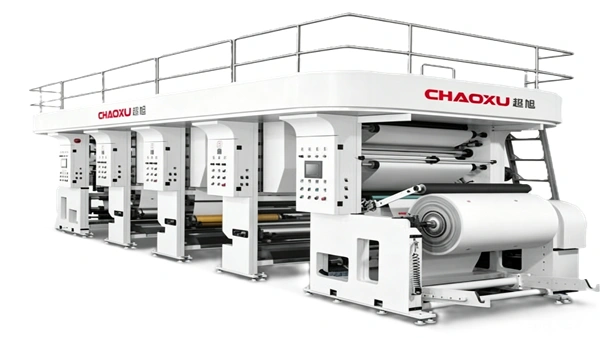
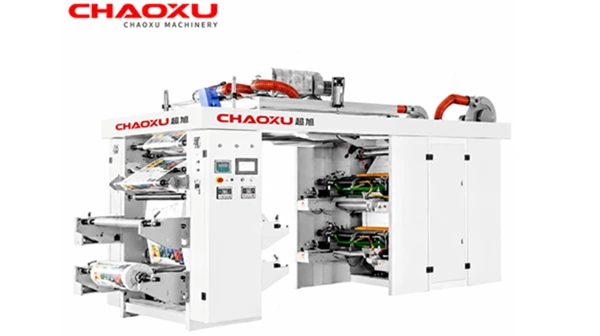
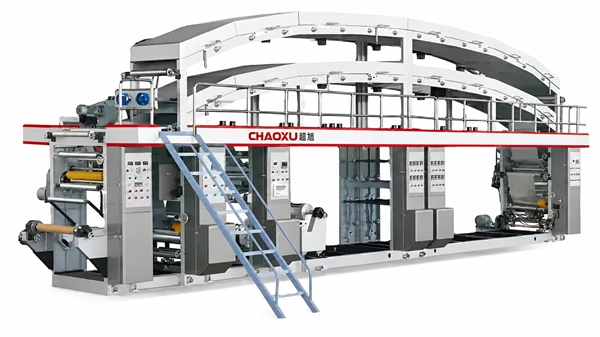
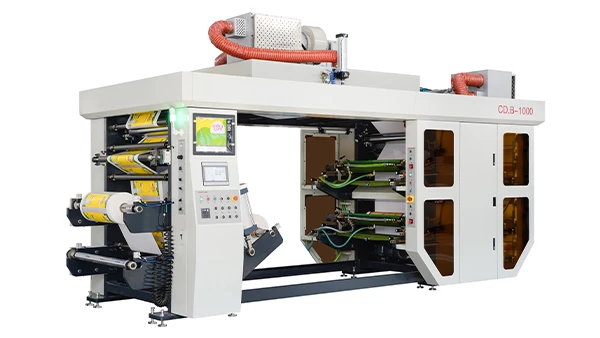
That’s why more converters are settling on a process that combines water-based ink compatibility with CI architecture—a combination that delivers food safety, print quality, and line efficiency in a single, compact footprint. The machine that executes this process is a flexographic printing machine, and it has evolved far beyond the clunky stereotypes of the past. Today’s servo-driven, sleeve-based models can hit 200 LPI on 20 gsm paper while holding registration within 0.05 mm at 500 m/min—numbers that would have seemed unrealistic just a few years ago.
A flexographic printing machine suited to food wrapper work is not a generic piece of equipment; it’s a carefully specified assembly of dryers, tension zones, and ink delivery components tailored to thin, sensitive substrates. When you evaluate one, you’re not just buying speed—you’re buying the confidence that every wrap coming off the reel will look sharp, smell neutral, and pass an audit.
The final step is to match that technology to your specific product mix. Whether you’re printing burger wraps, bakery tissue, or interleaving sheets, the right configuration will differ in web width, color count, and drying architecture. If you want a head start on that matching process, you can get a tailored consultation and spec comparison from Chaoxu’s application engineers—built around your actual wrapper paper samples.