English
 عربي
عربي 
You’ve probably seen it: a narrow-web label run where the magenta starts drifting, turning crisp text into a blurry mess. The operator scrambles to adjust the register, but the damage is already there — hundreds of meters of substrate heading straight for the recycling bin. When overprint accuracy slips, so do margins, lead times, and customer trust. This is precisely where servo drive technology has rewritten the rules for multi-color printing.
The Real Cost of Register Errors
In fast-moving label and packaging production, overprint errors don’t just annoy the quality team — they eat into profitability. According to ISO 12647-6, process-color registration tolerance for flexo is typically set at ±0.1 mm. Anything beyond that translates into visible halos, out-of-register drop shadows, and rejected batches. In practice, many converters report that when press speed exceeds 200 m/min, mechanical drivetrains begin to lose their grip on that narrow tolerance band, particularly on extensible films like LDPE or thin BOPP.
But the root cause isn’t the operator’s skill. It’s often hiding in the transmission system itself. Geared drivetrains rely on long mechanical line shafts, gearboxes, and couplings that introduce cumulative backlash, wear, and torsional wind-up. When each print deck is mechanically locked to a single motor through physical connections, the smallest vibration or temperature shift can knock a station out of phase. The result: constant micro-adjustments that never quite catch up.
Shaftless Motion: Rethinking the Drivetrain
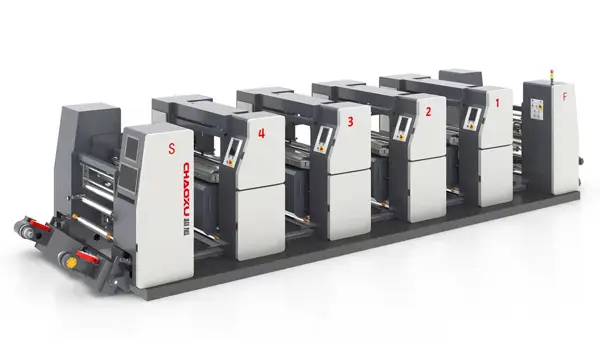
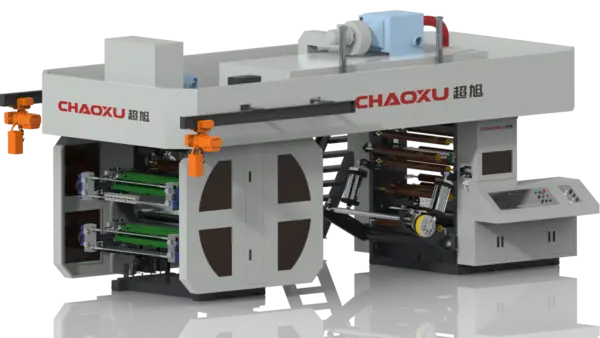
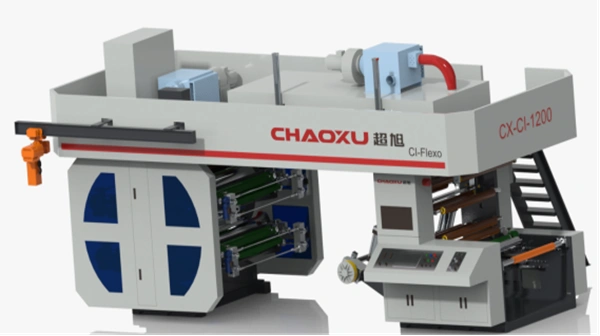
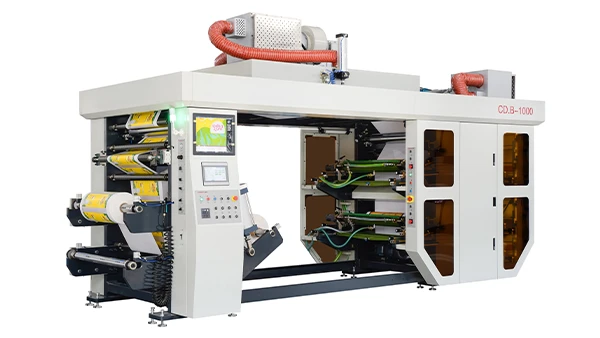
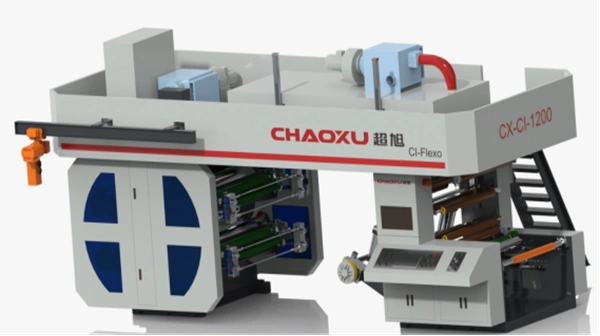
Servo drives break this mechanical chain. Instead of one big motor turning a line shaft that drives every unit, each print deck, anilox roll, and impression cylinder gets its own independent servo motor. An electronic line shaft synchronizes all axes via a high-speed motion bus, with real-time feedback from high-resolution encoders — often 20-bit or higher — that report position data thousands of times per rotation. This is not merely “motor replacement”; it’s a fundamental shift from open-loop mechanical coupling to closed-loop electronic control.
The immediate benefit is phase accuracy. A servo-driven press can maintain angular synchronization between decks within fractions of a degree, even when accelerating from zero to full production speed. If the material stretches or the web tension fluctuates, the drive system recalculates the registration offset and automatically shifts the plate cylinder phase without stopping the press. For converters handling thin films or thermally sensitive substrates, this adaptability is the difference between a profitable shift and a write-off.
Where Closed-Loop Register Control Shines
Servo drives enable the practical implementation of fully automatic register control systems. In a typical setup, a high-speed camera or photoelectric sensor reads micro-printed register marks on the web. The controller then compares the actual positions of each color against the master reference and sends trim commands to the servo drives in milliseconds. This loop runs continuously, compensating for factors that a mechanical system would simply endure: bearing heat expansion, ink tack variation, or slight changes in plate circumference due to mounting tape thickness.
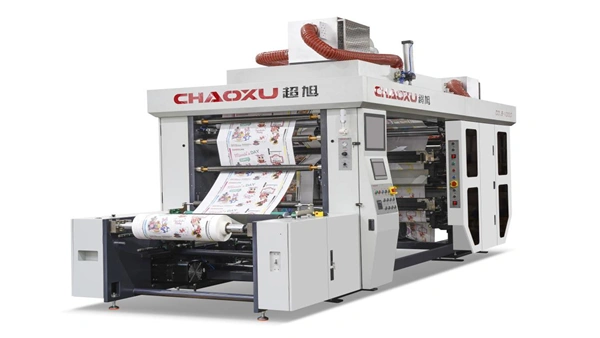
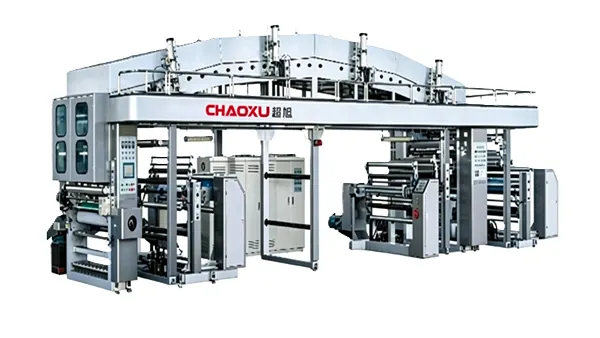
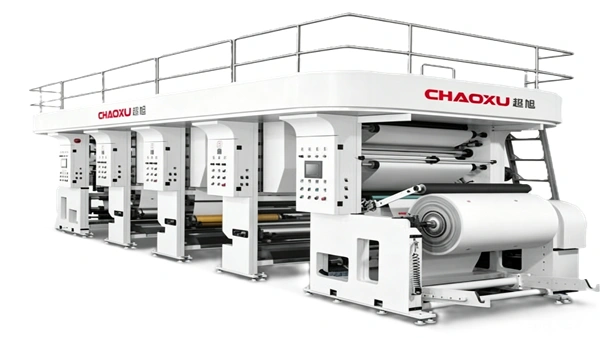
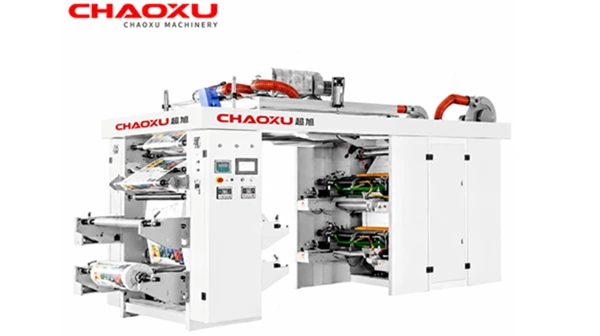
In a recent upgrade documented by a Midwest label converter, switching from a mechanical drivetrain to a servo-driven platform reduced the average transversal register error from ±0.12 mm to under ±0.04 mm, while slashing job setup waste by nearly 40%. The ability to run at 300 m/min without hunting for registration transformed their cost model for long-run shrink-sleeve labels — a segment where printed distortion is notoriously hard to manage. If you’re currently evaluating a flexible packaging press with similar demands, you can view the servo-driven configuration details here to see how modern platforms handle closed-loop control.
Key Factors That Determine a Servo Press’s True Accuracy
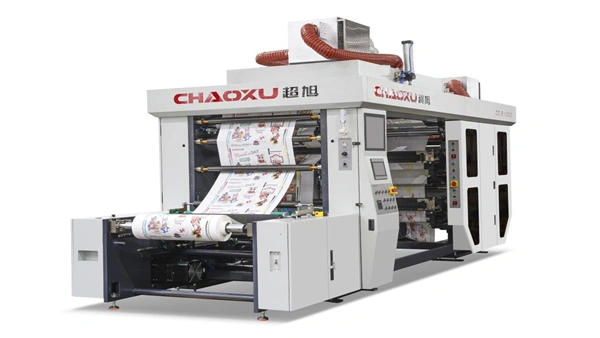
Not all servo-driven presses deliver the same registration performance. Based on real-world commissioning and troubleshooting, there are a few areas that separate best-in-class machines from those that still struggle with drift:
-
Motion Bus Speed and Jitter: The communication protocol (EtherCAT, SERCOS III, or similar) must support sub-millisecond cycle times. Any latency in position command delivery between the virtual master and the slave axes becomes a direct registration error at high speed.
-
Encoder Resolution and Mounting: Direct-drive motors with absolute encoders eliminate the need for homing cycles and keep track of position even after power loss. Loose or misaligned encoder couplings, however, can introduce periodic errors that appear as sinusoidal misregister.
-
Web Path Geometry and Tension Zones: Servo drives can’t compensate for poor mechanical design. If the web path between print decks isn’t optimized — with proper idler placement and load-cell-based tension control — the drive will constantly fight substrate flutter. The most reliable systems treat tension regulation as a parallel control loop, not an afterthought.
-
Thermal Management: Servo motors and drives generate heat, especially during long runs. Inadequate cabinet cooling or motor ventilation leads to thermal drift in analog feedback circuits. This is why top-tier press builders specify thermal derating curves and use forced air or liquid cooling for critical axes.
Once you understand these factors, you’ll start asking different questions during a press demonstration — not just “What’s the maximum speed?” but “What’s the maximum speed while holding ±0.05 mm registration on 12-micron PET?” That shift in perspective puts performance ahead of brochure numbers.
From Maintenance Headaches to Predictive Control
An often-overlooked advantage of servo-based platforms is the data they generate. Because every drive continuously logs torque, temperature, and position following error, operators and maintenance teams gain a window into machine health that geared presses simply can’t provide. If a plate cylinder bearing begins to degrade, the corresponding servo’s torque signature will show a gradual increase long before the vibration becomes noticeable to an ear or a dial indicator. This turns registration issues into predictive maintenance alerts rather than emergency calls at 2 a.m.
For shops that mix short runs with repeat jobs, stored servo parameters — including phase offsets, tension setpoints, and impression pressures — can be recalled instantly. Job changeovers that once consumed 30 minutes of wrench work and test prints now finish in under five, with the first impression often saleable. This repeatability is especially valuable for brand-color packaging where slight variation can trigger a rejection. For a deeper look at how servo memory and automatic pre-registration cut setup times, you can explore these rapid changeover capabilities in current-generation machines.
Is Servo Always the Right Answer?
Servo technology excels in high-value, multi-color applications where registration precision directly impacts brand owner satisfaction. For simple one- or two-color block printing on stable substrates, the added cost of full shaftless architecture may not be justified. But as run lengths shrink, versioning increases, and substrates become more challenging — think compostable films with higher elongation — the flexibility of independent servo axes becomes a competitive necessity, not a luxury.
Moreover, retrofitting servo drives onto an existing geared press is seldom straightforward. The mechanical core of the machine — frame stiffness, roller balance, cylinder runout — sets a hard limit on achievable accuracy. It’s more effective to invest in a platform designed from the ground up for electronic line shaft control. When you reach the stage of requesting quotations or lining up benchmark tests, it can help to get practical selection advice tailored to your specific substrate and color requirements.
If you’re chasing the final 5% of print consistency — the difference between a contract extension and a lost tender — the conversation has to move beyond print deck design and into drive architecture. Servo-driven platforms offer a measurable step change in registration accuracy, provided the entire system (motion control, tension regulation, and web path engineering) is designed to work as a unified whole. The result isn’t just fewer rejected meters; it’s the ability to take on higher-margin work that competitors running geared machines can’t touch.
References and Further Reading: ISO 12647-6:2020 Graphic technology — Process control for the production of half-tone colour separations, proofs and production prints — Part 6: Flexographic printing; PIA/GAA Flexo Quality Consortium publications on register tolerance benchmarks. The performance data cited are drawn from publicly available case studies and should not be interpreted as universal guarantees.