English
 عربي
عربي 
A packaging converter once told us, “Our repeat length is 1150 mm, so I need a machine with a 1150 mm web width.” On the surface, that logic sounds reasonable — until you realize it almost led to a six-figure purchasing mistake. If you are evaluating a press for flexible packaging, thin labels, or shrink sleeves, understanding the gap between maximum web width and actual printing width isn’t just a technicality; it’s the foundation of a well-specified line that won’t leave you with unusable capacity.
Where the confusion starts: “Web width” sounds like “print width”
Most specification sheets list a maximum web width — the widest substrate roll the press can physically transport through its unwind, printing stations, and rewind. Because this number is often the boldest figure on a brochure, many buyers unconsciously equate it with the maximum image area they can print in one pass. In reality, the printing width (sometimes called print width or image area width) is notably narrower.
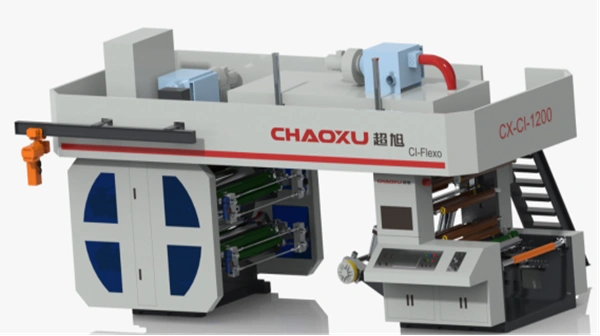
Why? A central impression (CI) drum or an in-line chassis needs space on both edges of the substrate for web guiding systems, tension bands, and sometimes edge-of-web sensors. Additionally, anilox rolls and plate cylinders do not cover the full drum face from edge to edge — there is always a safety margin to prevent ink from migrating onto the drum surface, rollers, or impression cylinders. In practice, the printing width is often 50–100 mm (2–4 inches) less than the maximum web width, and on wider machines the difference can exceed 150 mm.
The real costs of overlooking the difference
Let’s make this tangible with a mid-web scenario. A converter running polyethylene (PE) films for frozen food bags considers a press rated at max. web width 1300 mm. The actual printing width, per the manufacturer’s engineering drawing, is 1220 mm. If the converter’s typical job uses a substrate roll width of 1260 mm, the substrate fits — the web width is sufficient — but the image area cannot extend to the roll edges. The converter will either have to redesign the artwork with wider unprinted margins, reduce the roll width and waste film, or, worst case, find that the press cannot produce the job at all without squeezing print quality.
Another hidden cost surfaces with plate sleeves and anilox rolls. These are machined to match the printing width, not the web width. Ordering sleeves based on web width will result in parts that do not fit — a mistake we’ve seen delay startups by weeks. From a lean manufacturing perspective, any mismatch also distorts your OEE calculation because you are measuring output against a machine width you can never fully utilize.
Three dimensions you should verify — beyond the headlines
When you move past the glossy top-line number, three interlinked dimensions define what you can actually produce:
| Dimension | What it describes | Why it matters |
|---|---|---|
| Max. Web Width | Widest substrate roll the press handles | Determines the raw material format you can load and the physical lane width through dryers, treater units, and rewind. |
| Printing Width | Maximum imageable area across the web | Governs your printable repeat layout, plate size, and nesting efficiency — it’s your real revenue-earning width. |
| Min.–Max. Repeat Length | Circumferential image repeat (determined by cylinder or sleeve circumference) | Affects gear pitch, tooling inventory, and the ability to accept different bag lengths or label heights. |
A practical verification sequence we recommend to converters involves three simple steps: First, list your heaviest-volume substrate roll widths, not just the theoretical maximum. Second, ask the supplier to provide a printable area drawing (not just a layout diagram) showing the exact distance from the centerline to the first and last printing point on the plate cylinder. Third, cross-check that drawing against your artwork’s required image width plus any bearer bar allowance. This alone has prevented countless misfits. For those dealing with extensible films like thin LDPE or stretch PVC, also confirm that the tension control zone downstream of the print nip is fully within the printing width, because neck-in can further reduce the usable image area.
Why the “web width minus 80 mm” rule of thumb can be dangerous
An often-quoted shortcut says “printing width = max. web width minus 80 mm.” While this works for some narrow-web label presses, it falls apart for wide-web CI machines and for presses with rail-mounted trolley systems where the side frames occupy more space. The actual allowance depends on the guiding system type (edge-guide vs. center-guide), the presence of web cleaners or corona treaters integrated into the same lane, and even the drum temperature compensation system, which may require extra edge clearance for thermal expansion.
Instead of relying on a rule of thumb, refer to the machine’s certified specification sheet and, where possible, align with industry references such as the FTA’s FIRST methodology, which outlines how to define printability windows within mechanical constraints. If you are benchmarking multiple suppliers, normalize the printing width to the same substrate caliper and tension setting — a press that quotes 1250 mm print width with 12 µm PET will likely show a lower usable width with 30 µm BOPP under higher tension because of web elongation at the edges.
Matching the right platform to your width reality
For label converters, the interplay between web width and printing width is relatively forgiving because the absolute values are smaller, but precision is paramount. A 330 mm max. web width press usually delivers around 300 mm of print width — and losing those 30 mm can mean dropping from four-across label lanes to three, directly hitting productivity.
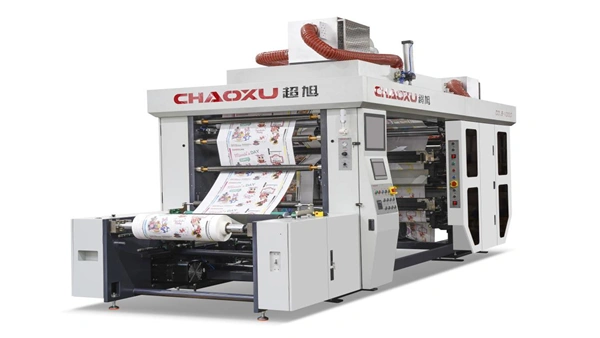
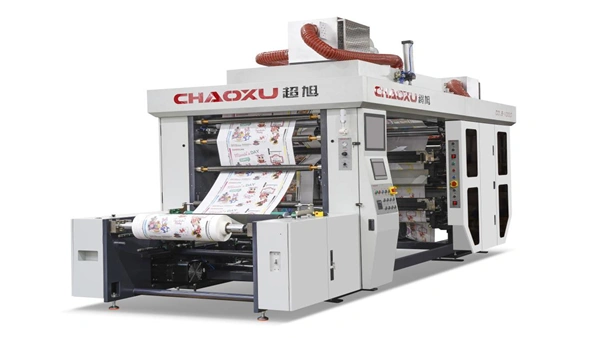
In flexible packaging, the stakes scale with width. A 1500 mm CI press might lose 120 mm to mechanical margins. That 8% “lost” width translates into thousands of euros worth of substrate over a year if you cannot optimize the layout. This is why seasoned production managers look at printing width first, then size the supporting equipment (unwind, rewind, dryers) around it — not the other way around. When you approach a supplier with a clear “I need X mm print width for job Y,” the conversation shifts from spec-sheet comparison to genuine solution engineering. Assess modular flexo platforms that let you align printing width, repeat range, and automation level with your actual product mix.
Future-proofing: width considerations beyond today’s jobs
Even if your current product portfolio fits neatly within a certain print width, consider the trajectory of your customers. Retail-ready packaging is trending toward larger format flexo-printed films as brands seek stand-out shelf presence. E-commerce padding films are also pushing width boundaries. If you today run 980 mm print width, a platform with a 1100 mm or 1200 mm print width capacity — not necessarily a huge jump in web width — could open up an entirely new customer segment without a complete press replacement two years down the line.
Be mindful, however, that increasing web width also changes the deflection characteristics of the CI drum and the dynamics of chambered doctor blade systems. A well-designed press manages this through a combination of drum diameter, wall thickness, and bearing support — criteria that only become visible in cross-section drawings and FEA analysis reports. Reputable manufacturers will supply these engineering details during a serious evaluation, and it is perfectly reasonable to request them.
A smarter way to specify your next press
When you start your next capital equipment discussion, flip the conversation. Instead of “What is your max. web width?” ask “What print width can you guarantee with my specific substrates and at my target speed?” The answer reveals far more about the machine’s true capability, the engineering margin built into its frame, and the supplier’s understanding of your application. That single question can filter out generic catalog machines from platforms genuinely adapted to your shop floor reality.
If you’d like to walk through a width specification exercise — whether for a 600 mm label line or a 1600 mm packaging press — we can help you map your current and planned job library to a concrete configuration. Getting the numbers right at the RFQ stage eliminates the most avoidable cause of post-installation regret. Discuss your print-width requirements with Chaoxu engineers and receive a tailored configuration review.