English
 عربي
عربي 
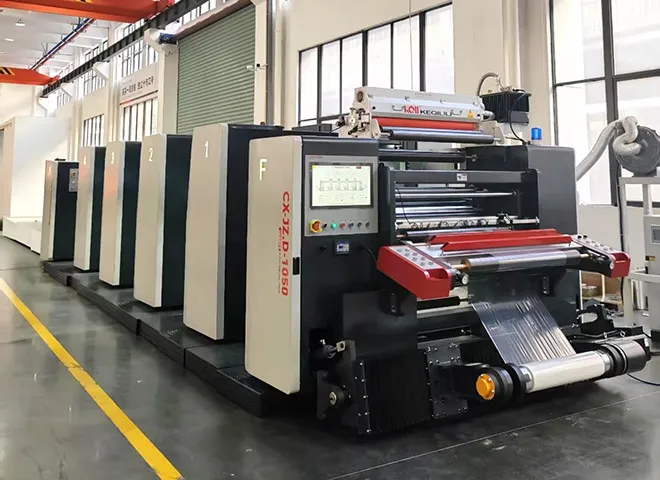
When a packaging converter in Southeast Asia recently replaced an aging European press, the budget gap was significant. The local agent for a German brand quoted nearly three times what they had planned. Then they started looking east.
“We were nervous about quality,” the plant manager admitted. “But after visiting three Chinese factories and running test prints, we found one that matched – even exceeded – our current line’s registration accuracy. And the price? Less than half.”
Stories like this are becoming common. Yet many buyers still hesitate, worried that “made in China” means cutting corners. The real question isn’t whether a Chinese manufacturer can meet global standards – many can. The question is: how do you identify the ones that actually do?
This article breaks down the practical benchmarks, common red flags, and a step-by‑step evaluation framework. No hype, just engineering reality.
1. What “Global Standards” Actually Mean for a Printing Press
Global standards are not a single certificate. They are a bundle of design, safety, material, and performance requirements that allow a machine to operate reliably in any regulated market. The most relevant include:
-
ISO 12647-6 (flexographic print quality control)
-
CE marking (machinery directive and EMC requirements)
-
ASTM D4169 (packaging material performance – often referenced for consistent substrate handling)
-
UL/CSA for electrical components if targeting North America
A truly global-standard manufacturer doesn’t just bolt on a CE plate. They design the electrical cabinet, emergency stops, and safety interlocks according to EN ISO 13849. They source bearings, drives, and controllers from proven suppliers like Siemens, ABB, or Beckhoff. And they provide documentation – wiring diagrams, spare parts lists, risk assessments – in clear English.
- Where shortcuts happen: Some factories order generic frequency converters and unshielded wiring. The machine runs, but electromagnetic interference causes random misprints. Or the emergency stop doesn’t comply with two-channel redundancy – a serious safety risk.
- How to verify: Ask for the EC declaration of conformity and the technical file. A serious manufacturer will share key pages (redacted for IP). Also request photos of the control panel wiring – neat, labeled, and using proper cable ducts is a good sign.
2. Five Technical Benchmarks to Compare (Beyond the Brochure)
Marketing brochures all sound similar. “High precision, stable structure, user-friendly interface.” Here are five concrete metrics that separate global-standard presses from the rest.
| Benchmark | Typical Entry-Level (Non-compliant) | Global-Standard Level | Why It Matters |
|---|---|---|---|
| Print registration accuracy | ±0.2 – 0.3 mm (claimed) | ±0.1 mm or better (verified) | Stacking tolerance for multi-color jobs; food packaging requires tight register. |
| Drying system uniformity | Single-zone IR lamps, hot spots | Independent zone control + hot air recirculation | Prevents ink smearing and substrate shrinkage. |
| Anilox roll runout | >0.02 mm | ≤0.005 mm (measured on a runout tester) | Consistent ink transfer, no banding. |
| Frame construction | Welded steel, no stress relief | Ribbed cast iron or stress-relieved welded + finite element analysis | Long-term geometric stability over 10+ years. |
| Electrical safety | No residual current monitoring | Type B RCD + safety relay with forced-guided contacts | Protects operators during wash-up and maintenance. |
A global-standard manufacturer will provide third-party test reports for registration accuracy and drying temperature distribution. They won’t just say “high precision” – they’ll show you the measurement protocol.
3. The Hidden Cost of “Almost Good Enough”
Let’s talk about what happens when a press meets 90% of global standards – but not the critical 10%.
A mid-sized label printer in Poland bought a seemingly cheap CI press from a Chinese supplier who claimed CE compliance. After installation, two issues emerged:
- The emergency stop circuit had a single-channel design. During a plate mounting accident, the machine did not stop immediately – a minor injury occurred. The local labor authority fined the company €15,000 and ordered the press to be retrofitted.
- The drying temperature fluctuated by ±15°C across the web, causing inconsistent adhesion on shrink sleeves. Rework rate hit 8%.
Total cost after one year: original purchase price + €22,000 in retrofits + lost production time.
The lesson: A press that isn’t fully compliant becomes a liability. For a few thousand dollars more upfront (often 15-20% of the machine price), you get verifiable compliance, proper documentation, and supplier accountability.
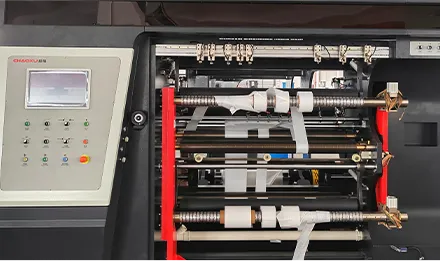
4. How to Evaluate a Chinese Flexo Manufacturer in 5 Steps
Instead of relying on sales talk, use this vendor assessment framework. It’s used by procurement teams in Germany, Brazil, and South Africa.
Step 1 – Request the “Technical Compliance Package”
Ask for: CE declaration, electrical schematic (sample page), test report for registration accuracy (with date and equipment serial number), and a list of major component brands (motors, drives, PLC, bearings).
Red flag: They say “we have CE” but cannot provide the technical file.
Step 2 – Video Walk-through of a Live Production
Ask for a 10-minute unedited video showing a running press with a print sample. Ask them to zoom in on the control panel while adjusting registration – you want to see the response time and whether the interface is logical.
Green flag: The operator uses a touch screen with clear English labels, and the machine stops immediately when an emergency button is pressed.
Step 3 – Speak to a Reference Customer in Your Region
A confident manufacturer will give you contacts of 2-3 customers who bought similar models in the last 18 months. Ask those customers: “What broke in the first six months? How fast was the spare parts shipment? Did you get a wiring diagram that matches the actual machine?”
Step 4 – Compare Warranty and Service Terms
Global-standard suppliers typically offer:
-
24 months warranty (not just 12)
-
Guaranteed response time for remote support (e.g., 4 hours)
-
A stocked spare parts warehouse in a major logistics hub (e.g., Rotterdam, Los Angeles, Singapore)
-
On-site installation and training included in the price
Step 5 – Audit the Factory’s Own Quality System
You don’t need to fly there. Request ISO 9001:2015 certificate, photos of the assembly line, and a short video of their measuring instruments (calibrated micrometers, runout testers, durometers). If they track torque on every bolted joint, that’s a strong signal.
5. The Modular Design Advantage (And Why It Matters for Your Future)
Printing requirements change. A brand might switch from solvent-based to water-based inks, or from paper to thin film. A press built to global standards is modular – you can retrofit a new anilox roll system, add a corona treater, or upgrade the drying tunnel without rebuilding the whole machine.
Non-modular presses often weld or glue critical components. When you need to change the web path or add a chill roller, you’re stuck.
Ask the manufacturer: “Show me a photo of the press with side covers removed. Can I access the main drive shaft without cutting structural beams?” A truly global design allows service access and future upgrades.
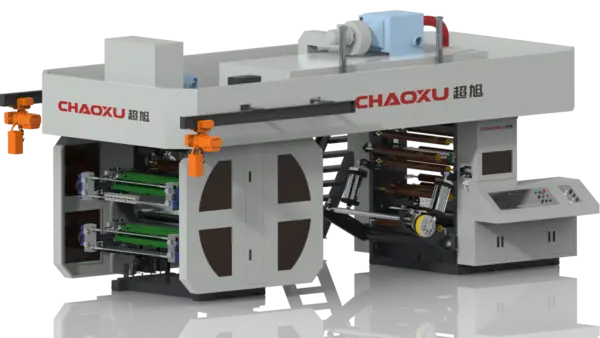
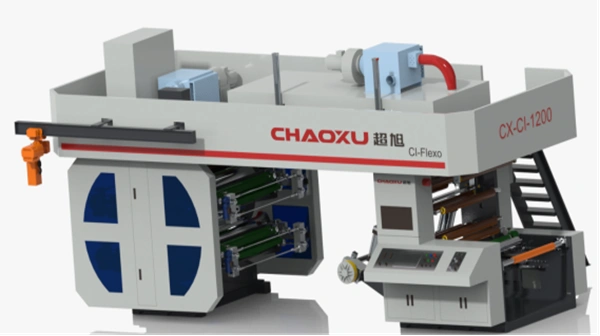
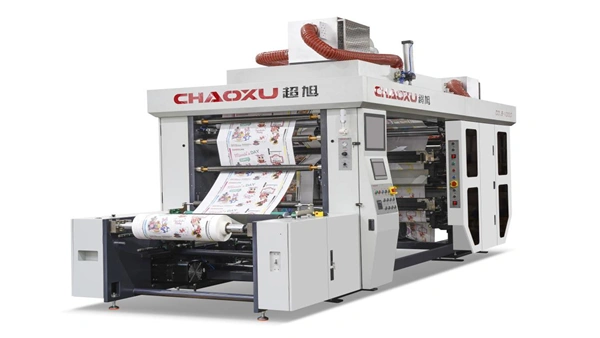
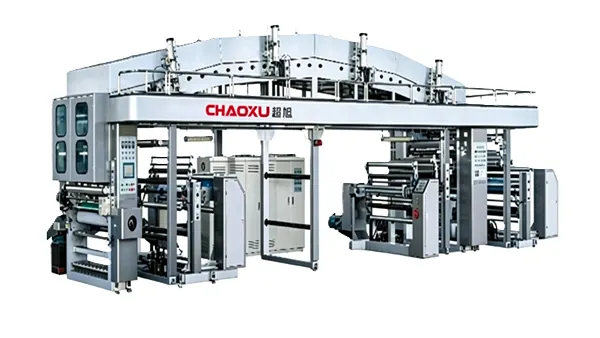
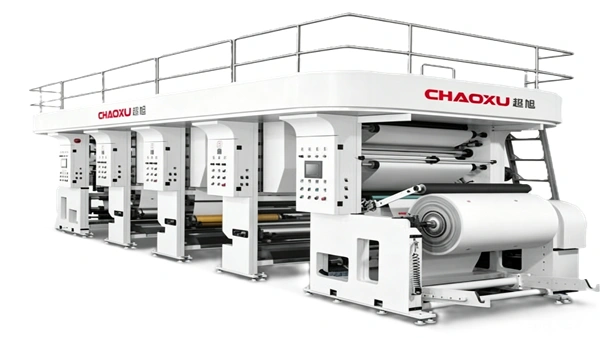
If you want to see a concrete example of how modularity is implemented in a mid-range press – including the type of servo drive interface used – you can explore the technical configuration of Chaoxu’s CI press. The documentation includes a dimensional drawing with upgrade slots marked.
6. Common Misconceptions About Chinese Flexo Manufacturers
Myth 1: “All Chinese presses are low-speed.”
Reality: Many global-standard models now run at 250–350 m/min continuously, with servo-driven versions reaching 400 m/min. Speed is no longer a differentiator – registration stability at high speed is.
Myth 2: “They copy European designs poorly.”
Reality: The better manufacturers have moved beyond copying. They’ve hired engineers from German and Italian lines and now innovate in areas like quick-change sleeve systems and energy-saving drying. But you need to distinguish innovators from copycats – the latter still exist.
Myth 3: “After-sales support is impossible.”
Reality: Top-tier Chinese suppliers have regional service hubs and use remote AR (augmented reality) glasses for troubleshooting. One manufacturer solved a print defect for a Chilean customer in 45 minutes via video call – no travel needed.
How to verify: Ask for a remote support session before purchase. Propose a hypothetical problem (e.g., “registration drifts after 2 hours of running”). See how detailed their diagnostic script is.
7. Final Decision Framework: Price vs. Total Cost of Ownership
Let’s put numbers in perspective. Assume you need a 6-color central impression press with 800mm web width.
| Option | Initial Price (USD) | Annual Downtime (hours) | Spare Parts Cost / Year | Compliance Risk | 5-Year TCO |
|---|---|---|---|---|---|
| Low-end, non-compliant | $120,000 | 250 (frequent misregistration, electrical glitches) | $8,000 | High (potential fines + retrofit) | ~$310,000 |
| Global-standard Chinese | $185,000 | 60 (mostly routine) | $4,500 | Very low (full CE/ISO) | ~$260,000 |
| European equivalent | $380,000 | 40 | $5,500 | None | ~$450,000 |
The global-standard Chinese press offers the best lifecycle value. But only if you verify the standards – not just the price tag.
8. Making Your Choice: A Simple Checklist
Before you sign any purchase agreement, print this checklist:
-
Supplier provided CE technical file (not just a logo on a sticker)
-
Registration accuracy test report from an accredited lab (e.g., TÜV, SGS)
-
List of major component brands with model numbers
-
Video of emergency stop test (showing immediate stop)
-
Two reference customers contacted – both satisfied with service response
-
Warranty term ≥ 24 months, with clear coverage of labor and travel
-
Spare parts availability confirmed within 5 business days to your region
-
Machine designed for modular upgrades (photo evidence)
If you check all eight, you’ve found a partner, not just a seller.
9. Why One Manufacturer’s Approach Stands Out
Among the growing number of Chinese suppliers, a few have systematically invested in global compliance – not as a marketing badge, but as an engineering baseline. Chaoxu started by benchmarking its assembly protocols against ISO 12647-6 and EN 1010 (safety of printing machines). Every press leaves the factory with a 52-point verification report, including runout measurement for each anilox roll and a thermal profile of the drying system.
For packaging converters who need predictable output, lower risk, and a reasonable budget, this level of transparency makes the difference. You can review the detailed inspection checklist and a sample test report – no login required.
10. The Bottom Line
Choosing a Chinese flexo manufacturer that meets global standards is not a gamble – it’s a procurement strategy. The key is to move from vague assurances to verifiable data. Ask for test reports. Check component brands. Speak to real users. And never accept “we are CE certified” without seeing the technical file.
The market has matured. Today, you can get European-level precision, Asian pricing, and responsive support – if you know what to look for. The few hours you spend on verification will save years of operational headaches.
Have you recently evaluated a Chinese press supplier? What was the most surprising technical detail you discovered? Share your experience in the comments below – or reach out if you need help interpreting a compliance document.