English
 عربي
عربي 
Inconsistent overprint accuracy is one of the most frustrating—and costly—problems in flexographic printing. You might see color-to-color misregistration that drifts over time, sudden shifts after a roll change, or a repeating pattern of “ghost” misalignment every few hundred meters.
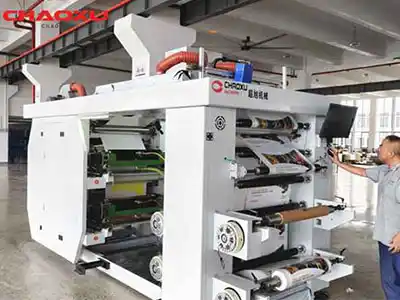
For many shops, the immediate reaction is to blame the substrate or the ink. But more often, the culprit lies deeper: mechanical wear, tension instability, or outdated drive train architecture. Before you schedule another maintenance shutdown or reject another batch of labels, let’s break down where registration errors actually come from—and how to fix them at the source.
The hidden cost of “small” registration drifts
A ±0.2 mm misregistration may seem minor, but on high-density jobs—like fine text, barcodes, or halftone screens—it can push entire runs below customer specifications. According to industry data, misregistration accounts for nearly 30% of flexo press waste in mid-web applications. Multiply that by material cost, downtime, and rework, and a single day of unstable printing can erase thousands in profit.
Beyond the financial hit, inconsistent overprint damages customer trust. Once a brand owner sees a drifting trap or a missing dot, they start questioning your quality control. Fixing the symptom—by slowing down the press or adding extra inspections—never solves the root issue.
Root cause analysis: why traditional flexo presses struggle
Most legacy flexo presses suffer from three mechanical weak points:
1. Gear train backlash
Traditional gear-driven print units accumulate backlash over time. Every start-stop, every clutch engagement, and every wear cycle adds 10–20 microns of play per gear mesh. With 4 to 8 color stations, total backlash can exceed 0.15 mm—enough to shift a fine serif font out of register.
2. Tension inconsistency between decks
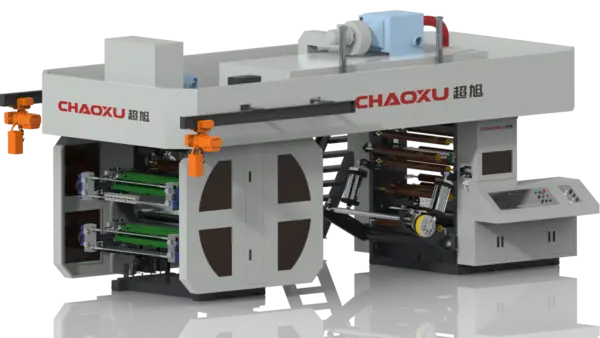
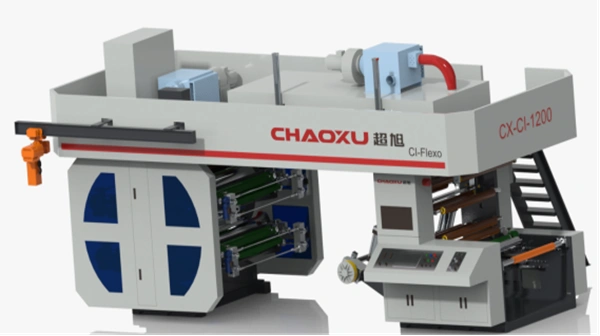
In a common impression (CI) drum design, the web travels around a large drum. Each print station applies its own nip load. If drum temperature fluctuates or the nip pressure changes unevenly, the substrate stretches or slips differently at each station. Older presses try to compensate with dancer rollers and mechanical clutches, but they react too slowly to rapid tension spikes.
3. Mechanical transmission harmonics
Long drive shafts, universal joints, and gearboxes introduce torsional vibration. These harmonics create a “wavy” registration pattern that repeats every revolution of the plate cylinder or anilox roll. Press operators often chase this ghost by adjusting register controls, only to see the error reappear on the next job.
The physics of stable overprint: decoupling rotation from tension
The core principle of accurate multicolor printing is simple: each print cylinder must rotate exactly in sync with the web speed, and each color’s longitudinal position must be independently adjustable without affecting the others.
That’s why many packaging converters are retrofitting or replacing old drives with individual servo motors per printing deck. A servo-driven architecture eliminates the long mechanical transmission chain. Each unit’s motor is directly coupled to its plate cylinder and anilox roll, and all motors are electronically geared to a master encoder.
This design attacks the three root causes directly:
-
No gear backlash – Direct drive = zero mechanical play.
-
Instant tension correction – Servo motors can adjust torque in milliseconds, compensating for substrate stretch or nip pressure changes.
-
Zero harmonic distortion – Electronic gearing has no torsional resonance from shafts or gearboxes.
For print shops that run a wide range of substrates, this architecture is a game-changer. You can store recipes for each material’s stretch factor, and the system applies dynamic registration offsets in real time.
Practical steps to improve overprint accuracy on your existing press
Even without replacing your whole press, you can reduce misregistration by focusing on three maintenance and operation areas:
1. Tension zone calibration
Measure your press’s tension at the infeed, between decks, and at the outfeed. Use a portable tension meter and compare values to your press’s setpoints. If deviation exceeds ±10%, recalibrate the dancer pot position or the servo amplifiers. Many shops find that a poorly tuned unwind brake causes 50% of their registration drift.
2. Print cylinder and gear inspection
Pull each plate cylinder and check its gear pitch circle runout. Use a dial indicator on a V-block. Runout above 0.03 mm will transfer directly to print position error. Also, inspect gear teeth for pitting or wear—replace any gear with visible wear patterns.
3. Register sensor cleaning and positioning
Dust and ink mist on optical registration sensors cause intermittent misreads. Clean sensors with isopropyl alcohol every shift. Also, to verify that the sensor’s “eye” points exactly at the register mark center, not at a halftone or screen area. Move sensors closer to the print nip to reduce web stretch between printing and sensing.
When incremental fixes aren’t enough: rethinking your next press investment
If you’ve optimized tension, replaced worn gears, and still see misregistration on stretchy films or high-speed runs, it may be time to evaluate a press platform built around servo-driven stability.
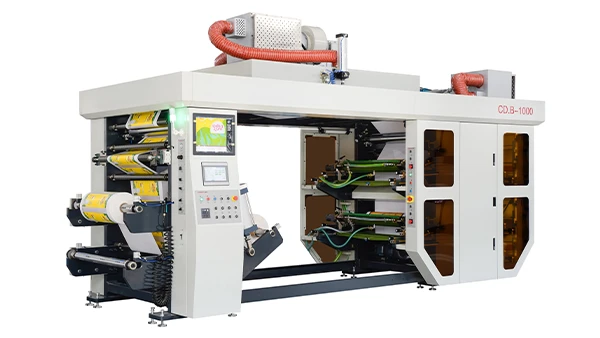
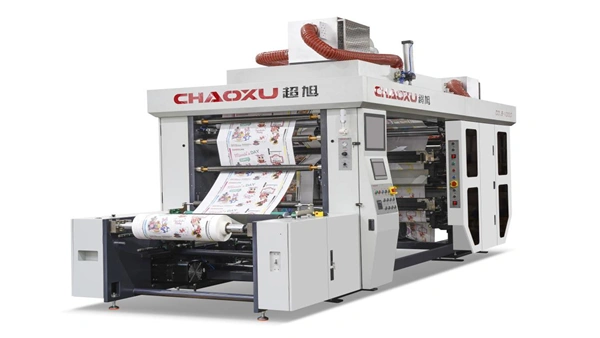
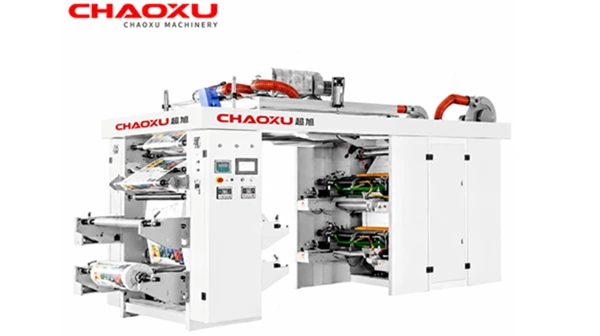
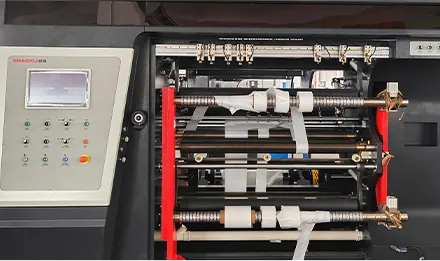
Modern full servo flexo press systems integrate all the above principles from the ground up. They don’t just add servos to an old frame—they redesign the web path, drum support, and print stations for minimal inertia and maximum stiffness. This allows < ±0.05 mm color-to-color registration at speeds exceeding 400 m/min, even on materials like shrink sleeve film or uncoated paper.
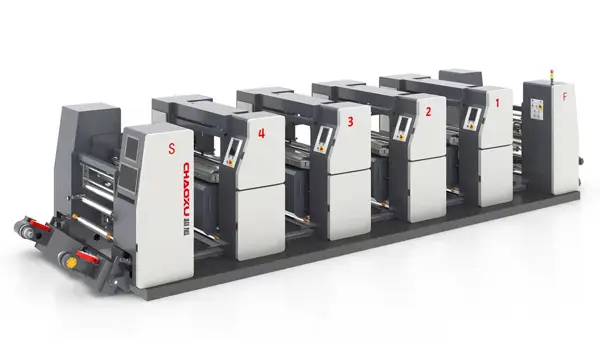
If you’re curious about advanced flexo printing systems with fully independent servo drives and real-time tension mapping, one approach is to look at platforms that combine CI drum construction with individual servo decks. These designs maintain the compact footprint of a CI press while eliminating virtually all mechanical registration drift.
Preventive strategy: building a registration stability protocol
To keep overprint accuracy consistent job after job, implement these four checks:
-
Daily: Verify register mark detection on all colors with a test print.
-
Weekly: Measure tension repeatability by running a standard substrate at 200 m/min and logging tension values every 10 minutes.
-
Monthly: Inspect one deck’s drive coupling and plate cylinder bearing for play.
-
Per job change: Re-zero electronic registers after mounting new plates, but also run a short “settling sequence” to let the tension control adapt to the new roll.
Many registration problems blamed on “operator error” are actually system response issues. By documenting tension and register performance, you’ll know exactly when to call for maintenance—or when to upgrade.
Summary: from reactive fixes to reliable precision
Inconsistent overprint accuracy doesn’t have to be your shop’s norm. Most causes are measurable and fixable: gear backlash, tension lag, or sensor misalignment. Start with the low-cost maintenance steps above—they can reduce misregistration by 40–60% in many legacy presses.
For the remaining gap, especially if you run difficult substrates or need ultra-tight tolerances, a press platform designed around high-precision, fully servo-driven architecture with electronic shaft technology offers a path to consistent <0.05 mm registration without chasing ghosts.
If you’d like to see how Chaoxu’s approach to eliminating mechanical transmission errors translates into daily production stability, the application engineers can walk you through a real sample run on your own substrate—no commitment required.
*References: FTA “Waste Reduction Benchmark” (2022), ISO 12647-6:2020 flexo print quality parameters, internal shop data from 12 mid-web converters.*