English
 عربي
عربي 
A production manager in Illinois once told me, “I don’t need a faster press. I need a press that stops lying to me about where the registration is.”
He was running a high‑end gear‑driven machine. Every 2,000 meters, the color would ghost. Operators would tweak, print 500 test meters, tweak again. By the end of the shift, they’d scrapped 15% of the run—not because the press was slow, but because it was unpredictable.
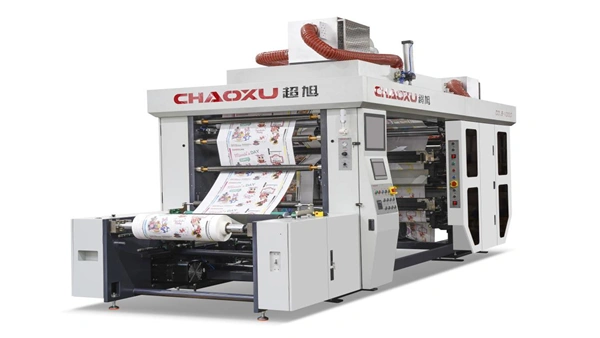
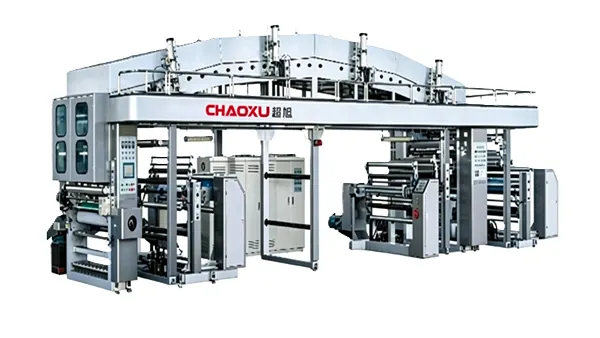
That conversation comes back every time I watch a modern full servo unit press in action. No chasing. No drift. Just the same register at meter 10,000 as at meter 100.
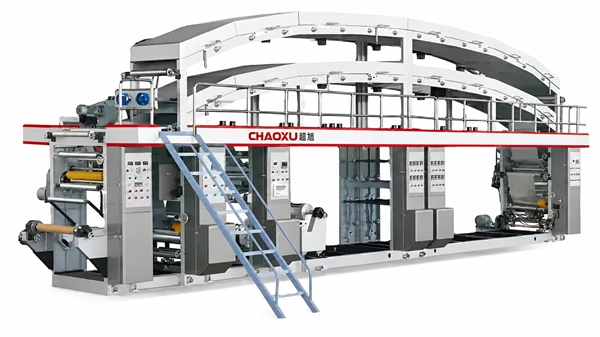
If you’ve only run mechanical or hybrid presses, the term “full servo” might sound like marketing hype. It’s not. It’s a fundamental rethinking of how each printing station moves—and what that means for your bottom line.
Why “Full” Matters – Not Just Servo‑Assisted
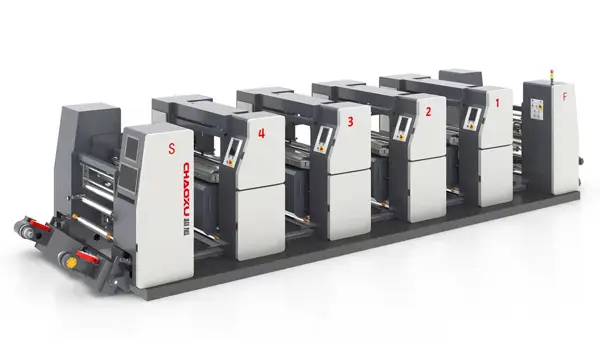
Many presses today advertise servo technology. But there’s a big difference between servo‑assisted (servo motors added to a mechanical gear train) and full servo (every station has its own independent motor, controller, and encoder).
Here’s what changes when you remove the main drive shaft entirely:
| Performance Metric | Mechanical Drive | Servo‑Assisted | Full Servo (Unit Type) |
|---|---|---|---|
| Register accuracy | ±0.2–0.5 mm (drifts) | ±0.1 mm (less drift) | ±0.05 mm (locked) |
| Set up waste (per job) | 250–400 m | 80–150 m | 20–50 m |
| Changeover time | 30–60 min | 15–25 min | 5–10 min |
| Tension control per station | Fixed ratio | Limited independence | Fully programmable |
| Backlash/gear wear | Yes | Reduced (still gears) | Zero (no gears) |
| Energy use | Constant load | Moderate | On‑demand (savings 20–30%) |
Sources: FTA FIRST 4.0 recommendations, converter production logs (2023–2024).
The key insight: Full servo doesn’t just improve one thing—it removes the mechanical coupling that forces compromises. Want different tension on station 2 vs. station 4? Easy. Need to reverse a single deck for quick cleaning? Done. The press adapts to the job, not the other way around.
.webp)
Three Ways Full Servo Kills Waste
Let’s move from specs to shop‑floor reality. A full servo unit press attacks waste in three distinct ways—each worth real money.
1. Zero‑Backlash Registration
Every gear has clearance. Over time, wear increases that gap. Operators compensate by adding “mechanical zero” offsets, but that’s a bandage. Full servo drives the plate cylinder directly. The encoder reads position 8,000 times per second. If the controller sees a 0.01 mm deviation, it corrects within milliseconds—before your eye could even see the misregister.
Result: You can run 50,000 meters without a single manual register adjustment. One European converter we interviewed went from adjusting every 45 minutes to never touching the register during a shift.
2. Job Recipe Storage & Instant Recall
Traditional changeover means: disengage gears, align mechanical timings, pull test prints, adjust, repeat. Full servo presses store everything—tension profiles, impression settings, anilox engagement positions, and even drying parameters.
An operator recalls Job #452, and all 8 stations automatically move to the saved position. First pull is usually saleable. One US label printer cut changeover waste from 380 meters to 45 meters on short runs of 2,000 meters. That’s 335 meters saved per job. At 6 changeovers/day, 200 days/year → over 400,000 meters of substrate not turned into scrap.
3. Independent Tension Zones
Mechanical presses force all stations to pull at roughly the same torque. That works fine for stiff paper. But try running a 20‑micron metallized film: the unwind needs low tension to avoid stretching; the middle stations need slightly higher tension to maintain web flatness; the rewind needs taper tension to prevent telescoping.
Full servo lets you program each zone independently. A narrow‑web converter running shrink sleeves reported web break reduction from 12 per shift to 1 per week after switching to full servo unit configuration. Their material waste plummeted from 8% to 2.5%.
Real Numbers from a Mid‑Size Converter
A flexible packaging plant in Poland (serving dairy and confectionery) replaced two aging gear‑driven stack presses with one full servo unit press. Twelve months of production data showed:
-
Overall waste: 11.2% → 2.8%
-
Average job changeover: 47 min → 9 min
-
Extra short‑run jobs accepted (under 3,000 m): from 3 per month to 22 per month
-
Operator overtime: reduced 18 hours/week (less time chasing register)
The plant manager’s comment: “We used to say no to test batches. Now we say yes—and we still finish earlier.”
But Isn’t Full Servo Expensive?
Yes—upfront cost is higher, typically 25–40% more than a mechanical press of similar width. But the payback calculation has changed.
Five years ago, servo electronics were fragile and expensive to replace. Today’s industrial servo motors have MTBF ratings above 50,000 hours. And the cost of drives has dropped while mechanical gearbox prices have risen.
Let’s do a simplified payback:
-
Extra capital: $120,000 (compared to a high‑end mechanical press)
-
Annual material savings (on 2 million meters, 8% waste reduction): 240,000(at240,000(at1.50/m substrate)
-
Annual labor savings (less overtime, faster changeovers): $35,000
-
Total annual benefit: $275,000
Payback period: 5–6 months. After that, the full servo starts adding profit.
Of course, your numbers will differ by substrate mix and run lengths. But the direction is clear: full servo unit presses now pay for themselves faster than any mechanical press could.
.webp)
Who Should Not Buy Full Servo?
Honesty matters. Full servo isn’t for everyone.
-
Single‑product, 24/7 paper bag plants with long runs and zero changeovers may not need the agility. A basic mechanical press will run cheaper per meter.
-
Operations with very low electrical stability (frequent brownouts) might face servo drive resets. A line conditioner solves this, but it’s an extra cost.
-
Shops that never run films or thin substrates won’t fully use independent tension zones.
But if your mix includes more than one substrate type, or you change jobs more than twice a day, or you keep losing money on short runs, full servo isn’t a luxury. It’s the most profitable tool in your arsenal.
What to Look for in a Full Servo Press
Not all full servo systems are equal. Ask suppliers these questions:
-
Is each station truly independent, or do stations share a controller? (True independence means one controller failure doesn’t stop the whole line.)
-
What’s the encoder resolution? 4,000 PPR is entry level; 16,000+ PPR gives finer register correction.
-
Does the press support remote diagnostics? Servo drives generate data—good suppliers use it for predictive maintenance.
-
Can I retrofit my existing dryer or corona to work with the servo architecture? Many lines integrate seamlessly.
If you want to compare technical specifications across three full servo platforms, download a side‑by‑side feature checklist that highlights what actually matters on the shop floor.
The Bottom Line
Full servo unit technology has moved from “bleeding edge” to “standard for competitive converters.” The plants that installed it five years ago are now widening their lead—lower waste, faster response to brand owners, and the ability to profitably run jobs their competitors decline.
You don’t need to replace every press. But when you evaluate your next line, do this: run your toughest job on a full servo unit press. Measure everything. Then ask yourself how much waste you’ve been accepting as “normal.”
Because the new normal looks different.
For converters ready to see live production data—including pre‑ and post‑servo waste audits—explore real‑world case examples from Chaoxu that break down performance by substrate and job length.
Disclaimer: Payback calculations and waste reduction percentages are based on case studies and industry benchmarks. Actual results depend on substrate type, job mix, operator skill, and maintenance quality. Always validate with equipment suppliers using your specific production data.