English
 عربي
عربي 
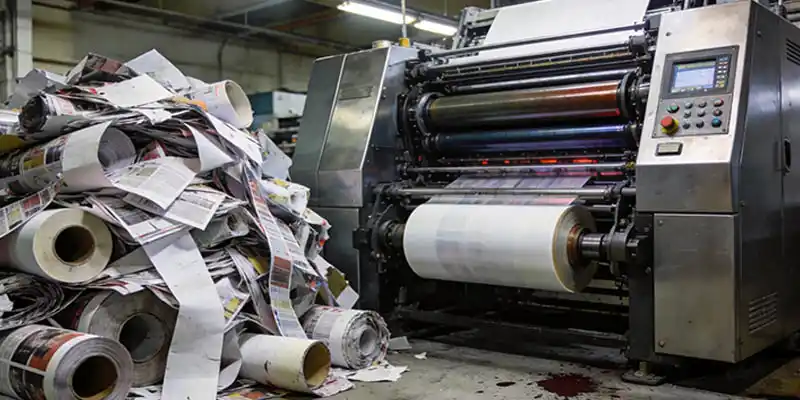
Every year, the average flexo converter scraps enough substrate to fill a 40‑foot container—sometimes two. Between setup waste, tension‑induced web breaks, and register drift during runs, that’s not just lost material. It’s lost time, labor, and customer trust.
Here’s a number that stops most plant managers: 5–15% of total material purchased never becomes a saleable print. According to a 2022 benchmarking study by the Flexographic Technical Association (FTA), plants with mechanical drive systems consistently fall at the high end of that range.
But what if you could cut that waste by more than half without replacing your entire press line?
The answer isn’t a new anilox or a better plate—it’s in the way your press moves. Specifically, whether every printing station, unwind, and rewind works from a central mechanical shaft or thinks for itself.
Where Traditional Drives Bleed Your Profit
Most older presses (and many new budget machines) use a main gear train—one motor turning a long shaft, with gears transferring power to each unit. It’s simple, proven, and… imprecise.
Three hidden waste generators live inside that design:
1. Backlash and torsional vibration
Gears have clearance. Under acceleration, one unit lags; during deceleration, it overshoots. The result? Micro‑registration errors that require constant manual correction. Operators chase “ghosting” and “doubling” by tweaking impression, not eliminating the root cause.
2. Tension mismatch between stations
When all units are mechanically locked, you can’t optimize tension per substrate. A film that needs low tension at the unwind but higher tension to pull through a dryer? Impossible. You compromise—and pay with wrinkled edges or broken webs.
3. Long, wasteful changeovers
Mechanical drive means you must align all units to a common zero point after every job. Gear disengagement, manual phasing, test prints, re‑align… 30–45 minutes of scrap generation before the first good meter.
A flexible packaging printer in Ohio shared their pre‑servo data with us: the average job changeover produced 380 meters of waste. Three shifts, six changeovers per day → over 2,200 meters of daily scrap. At 2.50/meter substrate cost, that’s 2.50/meter substrate cost, that’s 5,500 lost every single day—before counting ink, labor, or disposal.
The Servo Difference: Making Each Station Independent
Now imagine if each printing unit had its own motor, controller, and feedback loop. That’s the core idea of servo‑driven architecture—and it changes the waste equation fundamentally.
Here’s what independent servo control does in practice:
| Parameter | Mechanical Drive | Servo‑Driven System |
|---|---|---|
| Register accuracy | ±0.2–0.5 mm (drift over run) | ±0.05 mm (locked, no drift) |
| Set up waste per job | 250–400 meters | 20–50 meters |
| Changeover time | 30–60 minutes | 5–12 minutes |
| Tension range per unit | Fixed ratio across all stations | Independent, programmable |
| Energy consumption | Constant (motor always under load) | On‑demand (motors idle when not printing) |
| Mechanical wear | Gears, clutches, brakes (annual replacement) | No gear contact (5+ years maintenance‑free) |
The technical reason is simple: servo motors use closed‑loop positioning. An encoder on each unit tells the controller exactly where the plate cylinder is—thousands of times per second. If one unit drifts 0.01 mm from the master reference, the controller corrects it instantly. No backlash, no manual phasing.
According to Dr. John Anderson’s 2021 study in the Journal of Printing Science & Technology, servo‑controlled presses achieve register holding within ±0.05 mm across 10,000 meters of run, while mechanical gear trains show progressive drift exceeding ±0.3 mm after just 2,000 meters.
Real‑World: 67% Waste Cut in Six Months
A Midwest label converter (serving food and beverage brands) replaced its 15‑year‑old gear‑driven press with a servo‑based line. They kept the same anilox, same inks, same operators.
Results after six months (verified by their production logs):
-
Set up waste: 380m → 65m per job (83% reduction)
-
Running waste: 4.2% → 1.1% of total throughput
-
Changeover frequency increased because short runs became profitable
-
Annual material savings: $187,000
The plant manager’s comment: “We used to think waste was just part of flexo. Now we realize our old press was the problem, not the process.”
That kind of improvement isn’t limited to new machines. Many servo systems can be retrofitted to existing presses—replacing the main gear train with independent motors on each deck. The payback period, according to industry retrofit data, averages 9–14 months.
Three Signs You’re Ready for Servo Control
You don’t need to guess. If your press room matches two of these descriptions, servo architecture will likely pay for itself within a year:
-
Your operators spend >20% of their shift adjusting the register or tension.
-
You reject jobs because of “unexplained” color variation or misregistration after 5,000 meters.
-
You’ve turned down short‑run custom orders because the changeover cost makes them unprofitable.
Still unsure? Review a side‑by‑side waste analysis template to calculate your current hidden scrap cost per shift.
Why Not Everyone Has Switched Yet
Three objections come up repeatedly—and they deserve honest answers:
“Servo presses cost too much.”
Upfront, yes—about 25–40% more than an equivalent mechanical machine. But with 67% less waste and 80% faster changeovers, most converters recover the difference in 12–18 months. After that, the savings go to your bottom line.
“Our operators don’t know how to program servos.”
Modern servo controllers use job recipe storage. Operators don’t need to “program”—they recall a job number, and all tension, speed, and register profiles load automatically. Training takes two days, not two weeks.
“We’ll retrofit later.”
Retrofits work, but they don’t solve structural issues like worn bearings or outdated drying systems. If your press is over 12 years old, a new servo‑based platform often delivers better ROI than patching an aging frame.
The Hidden Benefit Nobody Talks About
Beyond waste reduction, servo control changes how you price jobs. With setup waste below 50 meters, short runs become profitable. You can say “yes” to test batches, seasonal packaging, and regional SKUs—work that competitors with mechanical drives refuse.
One European converter built an entire business model around “servo‑enabled agility.” They now charge a premium for 500‑meter custom runs, knowing their waste is negligible. Their mechanical‑drive competitors can’t match the economics.
Where to Start Your Waste‑Reduction Journey
If you’re convinced that your current drive system is leaking profit, you have three paths:
-
Path A: Audit your current press’s waste data for one month (meters scrapped per job, register drift logs). Compare against the servo benchmarks above.
-
Path B: Request a retrofitting assessment for your press model. Not all frames accept independent motors—know before you commit.
-
Path C: Evaluate new platforms designed from the ground up with servo architecture. These include integrated job storage, predictive maintenance alerts, and remote diagnostics.
Whichever path you choose, the key is starting. Every week you wait, that 5‑15% waste keeps flowing—straight to your scrap bin instead of your customer.
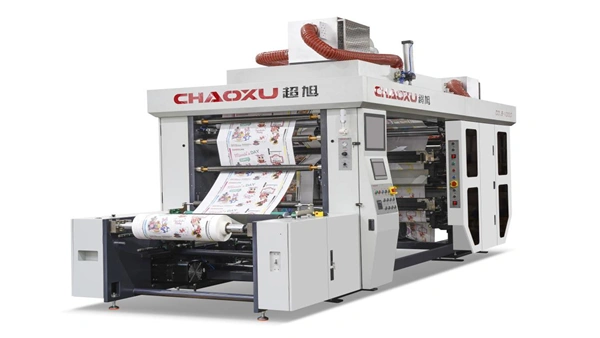
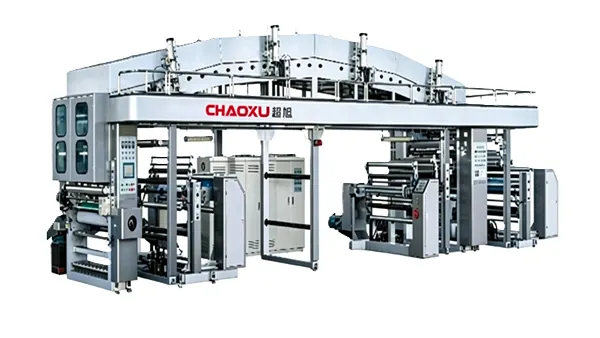
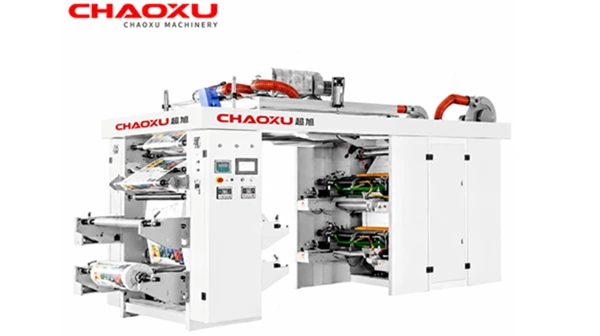
For converters who want to see exactly how servo integration works on a real production line, explore configuration examples from Chaoxu that include job‑by‑job waste tracking. The technical team there has documented servo retrofits on six press models and new builds for film, paper, and label applications.
Final Thought
A flexographic press without servo control is like driving a car with a loose steering wheel—you can still reach your destination, but you’ll burn extra fuel, wear out the tires, and arrive exhausted. The technology to cut waste by two‑thirds already exists. The only question is: when will you stop paying for scrap and start printing profit?
Disclaimer: Waste reduction percentages and payback periods are based on industry case studies and equipment supplier data. Actual results vary with substrate type, job mix, and operator skill. Consult with equipment manufacturers for site‑specific estimates.