English
 عربي
عربي 
A mid-sized label converter once shared a story that stuck with me. After months of deliberation, they purchased a 8-color press that looked perfect on the spec sheet. Six months later, the machine was running at barely 60% of its promised speed, and a single job changeover routinely ate up 45 minutes. The culprit? Not a single catastrophic failure, but a cascade of overlooked details during evaluation. The experience is far from unique; in fact, according to a survey by a leading packaging trade association, nearly 40% of first-time flexo buyers encounter unexpected downtime or quality issues within the first year, largely because they prioritized the wrong criteria during selection.
This article pulls together insights from engineers, operators, and plant managers to help you sidestep the most common and expensive oversights. Whether you are upgrading from letterpress, adding capacity, or transitioning into flexible packaging, understanding these pitfalls will shift your purchasing framework from a simple price comparison to a total-value assessment.
Mistake 1: Selecting the Wrong Press Architecture for Your Substrate Mix
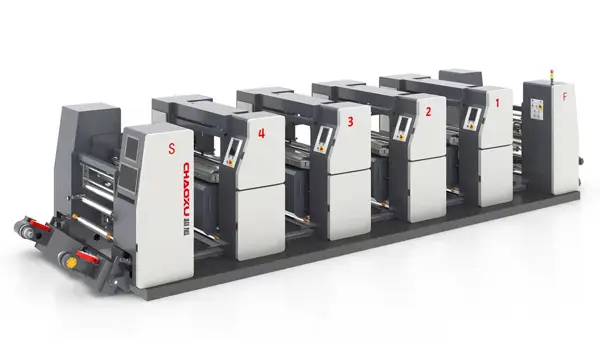
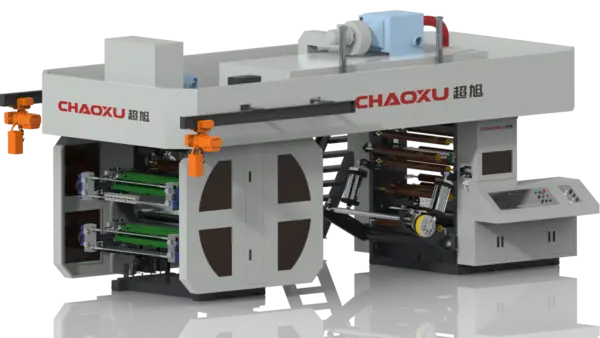
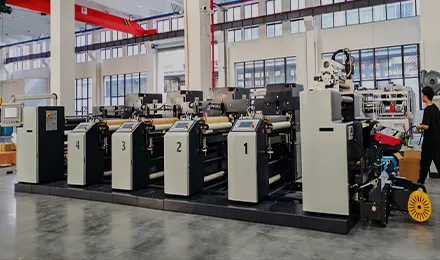
A flexo press is not a one-size-fits-all machine. The three dominant architectures—central impression (CI), inline/stack, and unit-type—each solve distinct problems, and mismatching the configuration to your real substrate range is a primary source of registration waste and setup grief.
-
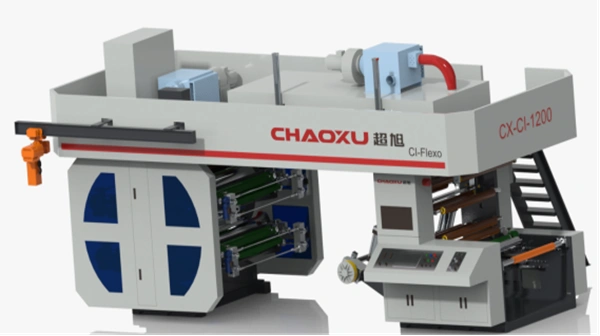
CI presses excel with extensible films (LDPE, thin PE) because the drum holds the web stable, preventing distortion as multiple colors are applied in quick succession. If your future work includes flexible packaging with high-elongation films, a CI drum is not a luxury; it’s a requirement.
-
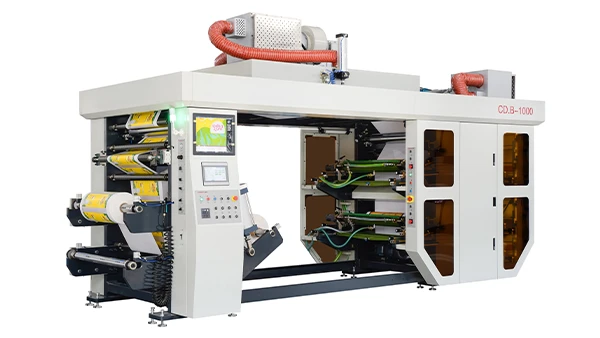
Stack presses handle paper, board, and non-wovens well, but the open web path between stations introduces tension wobbles on film below 50 microns, often leading to misregister beyond ±0.15 mm.
-
Inline/unit-type machines offer modularity for hybrid jobs (flexo coupled with screen or digital units), but only if the frame alignment and drives are engineered to maintain micro-registration across modules.
Before you invite a supplier demo, map out at least 90% of your expected substrate library: material, thickness range, extensibility, and surface energy. If more than 30% of your planned work involves extensible films, insist on a CI drum diameter that minimizes dot gain variation across repeat lengths. One engineer from a large food-packaging converter told me, “We skipped this analysis and ended up running our thin film work on a stack press. The scrap rate on process-color halftones hovered around 12% until we finally bit the bullet and reconfigured the floor.”
When evaluating architectures, pay close attention to the mechanical modularity and how the machine can evolve with your product mix. Many converters find that exploring modular design principles early prevents a costly frozen-asset scenario later.
Mistake 2: Overlooking Total Cost of Ownership and Fixating on Acquisition Price
It’s tempting to compare quotes solely on the upfront figure. However, a press priced 15% lower can easily double its effective cost over five years through energy consumption, ink waste, make-ready times, and spare parts inflation. Industry benchmarks from the Flexographic Technical Association (FTA) suggest that energy and consumables account for roughly 22–28% of total press operating cost, while labor tied to changeovers can add another 12–18%.
Key TCO indicators often missed:
-
Drying system efficiency: In some regions, gas-heated dryers with recirculation can cut energy per square meter by up to 40% compared to basic electric IR panels, especially on water-based inks. Request thermal energy consumption charts, not just installed kW.
-
Changeover clocks: A press that allows anilox roll and doctor blade chamber swap in under 3 minutes per deck, with an automatic washing cycle, can reclaim hundreds of production hours annually. Ask for documented video proof of real changeovers, not staged demos.
-
Cylinder and sleeve repeat range: A machine that accepts a narrow range of repeat lengths may force you to buy additional expensive sleeves or compromise on material waste. Quantify the cost of repeat-size mismatch against your top 10 SKUs.
During a recent press evaluation at a label plant in the Midwest, the team calculated that a seemingly expensive servo-driven machine would break even against a mechanical-press alternative within 14 months, purely on the reduction in substrate waste during setup. They had initially classified the servo option as “over budget.”
Mistake 3: Treating Automation as "Nice-to-Have" Rather Than a Skill-Multiplier
The global packaging industry faces a persistent shortage of seasoned press operators. In this environment, automated features are not about replacing humans; they are about enabling an operator with two years of experience to produce quality comparable to a 20-year veteran. Yet many purchasing decisions still treat auto-register control, impression presets, and job memory as negotiable extras.
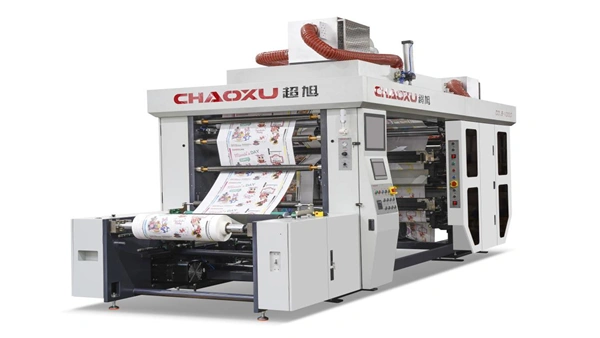
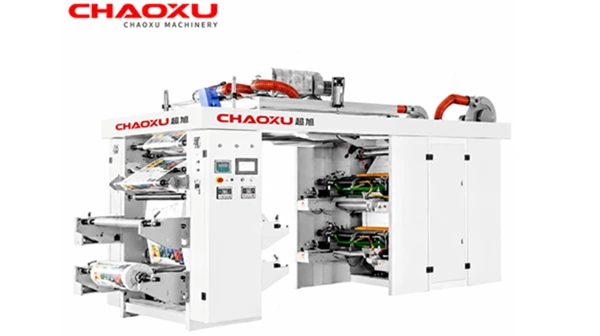
A modern flexographic printing machine equipped with a closed-loop register system can bring new jobs into color and fit within 40–60 impressions, versus several hundred on a manual system. This directly reduces startup waste and frees the operator to monitor print quality rather than chase micro-adjustments. Likewise, automatic viscosity control and ink temperature regulation stabilize delta E values across long runs, something nearly impossible to maintain with manual top-ups in summer heat.
The dilemma is that automation specs on paper can be deceptive. One converter discovered that the “auto preset” function on their new stack press required a manual calibration step that took longer than a skilled operator’s manual setup. The lesson: demand a live job changeover run on your actual substrate, and measure the precise number of impressions from “ink on” to sellable quality. If the supplier cannot demonstrate it on your material, flag the risk.
When the spec sheet includes smart systems, examining how a supplier integrates automation into the mechanical core helps you distinguish between genuine precision engineering and cosmetic add-ons.
Mistake 4: Neglecting the Anilox Roll and Ink Delivery System Specification
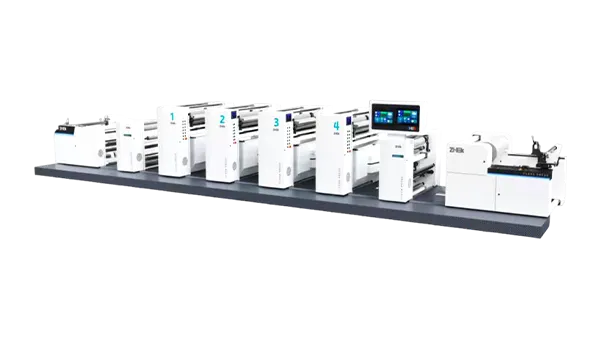
The anilox roll is the heart of ink transfer, yet many buyers merely note the line screen count and move on. Cell geometry, volume, and engraving consistency across the face width determine density uniformity and dot sharpness. A 6.5 BCM roll with a hexagonal cell pattern may deliver the same volume as a 6.5 BCM elongated cell, but the ink release curves differ dramatically, influencing highlight reproduction.
Insist on a supplier’s anilox certification: ceramic coating hardness (should exceed 1200 HV), TIR (total indicated runout) under 5 microns, and banded test prints showing density variation below ±0.06 across the web. Additionally, confirm that the ink chamber design prevents leakage across speed ranges and that the doctor blade contact angle remains stable as the blade wears. Ink contamination from a weeping chamber is a hidden productivity killer.
If you run high-line-screen process work, consider an on-press impression system that dynamically adjusts to anilox-to-plate and plate-to-substrate pressures. Without such compensation, an entire shift’s output can drift from proof in ways impossible to correct with ink formulation alone.
Mistake 5: Under-Evaluating Frame Rigidity and Mechanical Heritage
A flexo press is a decades-long investment. Beneath the sleek covers and touchscreen panels, the integrity of the side frames, gear trains (or direct-drive mounts), and impression mechanisms determines whether the machine still holds register after 15 years of 24/7 production. Spun-cast iron frames dampen vibration far better than fabricated steel, yet the difference is rarely highlighted in brochures.
During a plant visit, I watched a veteran operator place a machinist’s level on a 10-year-old press’s CI drum bearing housing. The bubble hadn’t shifted since installation. That level of stability comes from oversized bearing journals and controlled thermal growth pathways, design choices that add cost but prevent the slow geometric drift that eats into register margins year by year.
Ask for a documented machine capability study (often called a Cpk study) conducted after installation but before handover, measuring register consistency over 10,000 impressions at maximum rated speed. A Cpk above 1.33 is typical for a modern gearless press; anything below 1.0 suggests future quality trouble. If the builder cannot provide that data for a similar configuration, treat it as a warning signal.
Constructing Your Due Diligence Framework
Avoiding these mistakes translates into a structured evaluation process that goes far beyond the quotation spreadsheet. A pragmatic approach built from the above points could be:
-
Substrate-first filtering: Eliminate architectures unsuitable for your real material mix.
-
TCO modeling over 7 years: Include energy, consumables, labor for changeovers, and estimated waste based on the supplier’s documented make-ready data.
-
Live demonstration with your work: Run a job changeover on your substrate, count impressions to sellable quality, and measure color variation with a spectrophotometer.
-
Automation transparency: Request a written explanation of every “auto” feature—what it measures, how it actuates, and what operator input remains—and test it.
-
Mechanical integrity verification: Inspect frame material, bearing sizes, anilox TIR specs, and request post-installation Cpk data from reference sites.
If you want a partner that consistently addresses these evaluation points with transparency, it may be time to look at how Chaoxu approaches flexo manufacturing. Their engineering team provides substrate-specific feasibility analysis, detailed TCO calculations grounded in local energy and labor rates, and documented Cpk studies from real installations. Taking a deeper look at their flexo solutions and application support can provide a benchmark for what a thorough evaluation should uncover—regardless of the brand you ultimately choose.
Disclaimer: The cost benchmarks and technical figures cited reflect general industry ranges published by organizations such as the Flexographic Technical Association (FTA) and conversations with plant engineers; actual results vary with substrate, ink chemistry, and operating environment. This article does not constitute an endorsement of any specific equipment configuration for a particular facility.